


Red Maple Tree
Acer rubrum


Plant Sentry™ Protected
Your order is protected by our compliance system that:
- Prevents restricted plants from shipping to your state
- Ensures plants meet your state's agricultural requirements
- Protects gardens from invasive pests and diseases
Specifications
| Hardiness Zone | 3a to 9b |
|---|---|
| Sunlight | Full sun, Partial shade |
| Height | |
| Width | |
| Growth Rate | Fast |
| Watering Needs | Moderate |
| Preferred Soil | Clay, Loamy, Peaty, Sandy |
| Landscape Use | Woodland Garden, Rain Garden |
| Blooms In | Spring |
| Flower Color | Red |
| Native | Yes |
| Native To |
Alabama,
Arkansas,
Connecticut,
Delaware,
Florida,
Georgia,
Illinois,
Indiana,
Iowa,
Kentucky,
Louisiana,
Maine,
Maryland,
Massachusetts,
Michigan,
Minnesota,
Mississippi,
Missouri,
New Hampshire,
New Jersey,
New Mexico,
New York,
North Carolina,
North Dakota,
Ohio,
Oklahoma,
Pennsylvania,
Rhode Island,
South Carolina,
South Dakota,
Tennessee,
Texas,
Vermont,
Virginia,
Washington DC,
West Virginia,
Wisconsin
+31 moreshow less |
| Plant Characteristics | Cold hardy, Native, Fall Color/Interest, Clay Tolerant, Wet Soils, Heat Tolerant, Hedge/Screen, Fast-growing, Flowering, Disease resistant, Self-pollinating |
| Botanical Name | |
| Does Not Ship To | AK, HI, ID, MT, PR, VI |
Description
Desirable Red Maple Tree Has Wonderful Fall Color
- Incredible Fall Color
- Red Blooms in Spring
- Hardy Across the United States
- Fast Growing
- Easy to Grow
- Wonderful Shade and Street Tree
- Even and Symmetrical Shape
- Well Behaved Roots
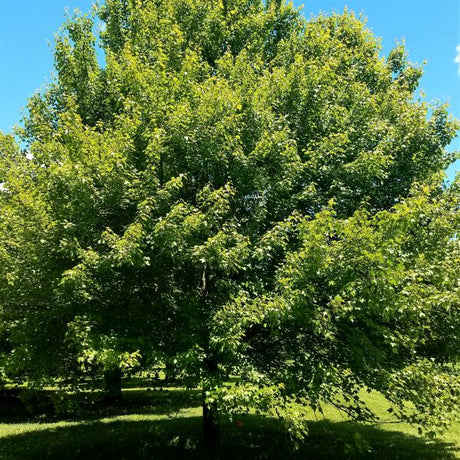
For an easy winner, select the Red Maple (Acer rubrum) to use as a shade tree in your lawn, or parading along the street or driveway. These native trees have so much going for them, you'll be very pleased with this choice.
No matter if you live in the cold winter zones of Minnesota, or the sub-tropical Florida panhandle, Red Maple will be a reliable shade tree for you. You won't have long to wait for that shade, either. Red Maples grow quickly.
Some trees require a lot of research on how to care for them. Well, not the Red Maple. It just grows in a beautifully even branch structure, and then proceeds to knock your socks off in autumn. The fall color simply has to be seen to be believed!
From year to year, and even on different branches from the same tree - you'll see the brilliant fall color range from bright scarlet red to orange-red and warm yellow. It's a beloved part of the fall season, and you'll cherish the special show your tree puts on for you.
Local wildlife appreciates this native tree. Small, pretty, early spring red flowers support critical pollinators. The leaves emerge after the red flower clusters in the spring and are yellow-green and age to dark green with a silvery underside. Wide branches provide easy shelter for birds.
Families love this tree, too. With its upright branches, it's easy to host picnics underneath it. This is the tree you all know with its furrowed, textured bark. Distinctive, lobed greens leaves provide shade all summer and develop brilliant fall foliage color.
Maybe you remember jumping around in big piles of these colorful leaves when you were a kid. What a gift to pass along to future generations.
If you're looking for a great native shade tree, you found it. Red Maple works beautifully for families and home landscapes across the United States. Order today!
How to Use Red Maple in the Landscape
Both newly built and established homes need plants to help ground them to their surroundings, and Red Maples work beautifully to do just that. Try a single tree placed in the southwest area of your lawn to give lovely shade.
Or, use several trees planted 12 to 15 feet apart (measuring from the trunk of one, to the trunk of the next) to create a lovely grove. In their native habitat, Red Maples naturally grow together in groups like this. They'll look breathtaking screening an outdoor kitchen area from the hot summer sun.
For an easy focal point, use Red Maples as an anchor in a long, curved garden bed. Depending on how much room you have, include 1, 3, 5 or 7 Red Maples along the length of your bed. It's best to plant them in a slight zig-zag for a natural look.
For a rugged look that shines all year long, add a layer of Bailey Red Twigged Dogwood shrubs, then tuck in a few well-behaved evergreen shrubs like Kallay's Compact Juniper. Punctuate the planting with several upright Karl Foerster Ornamental Grasses and the sculptural charm of Adam's Needle Yucca. Plant low Prairie Dropseed along the edge of the bed. Include tall Pine trees behind the Maples to complete the rustic, native look.
Red Maple can also be used with spring-flowering perennials. Create a grouping of Red Maples, and underplant them with drifts of Daffodil bulbs, Hosta, Bleeding Hearts, Coral Bells, Astilbe and Ferns. Don't forget to include some evergreen color like Fragrant Valley Sweet Box. What a breathtaking, fragrant and very effective display!
Because their roots are much less aggressive than Silver Maples, Red Maples also make great specimen plants for lawn or street tree plantings. Consider a row of them planted along the driveway for a homecoming welcome you won't forget.
#ProPlantTips for Care
Red Maples are relatively disease and pest free. They tolerate a wide variety of soil conditions and need regular watering.
In hot, dry climates of Zones 8 and 9, provide a 3-inch mulch cover all around the tree. Don't let the mulch directly touch the trunk.
They will tolerate a bit of shade and even periodic wet soils, if the soil drains quickly. If planting in poorly drained clay soils, consider mounding up improved topsoil 12 to 18 inches above the soil line. Plant your tree directly into that mound.
This classic landscape shade tree is native to almost all of North America, from the East Coast to Minnesota, north into Canada and south to Eastern Texas and through the southern states to Florida. They are also found native to the state of Oregon.
Typically, they are found growing in cool, moist and swampy soils. They're also known as Scarlet or Swamp Maples. As you can imagine from their nicknames, they do not naturally display drought tolerance. Rather, try them in the middle, or Mesic Zones of Rain Gardens, where they will drain faster than the Wet Zone.
Red Maple's wide range of adaptability, wonderful fall color and fast growth make it a first choice for that special place in need of shade in the landscape. That is what makes this tree so desirable. Order today!
Planting & Care
Delivery and Shipping
Shipping Rates
Ships in 3-5 business days • Tracking provided • Weather protected
| Under $50 | $9.99 |
| $50 - $99.99 | $14.99 |
| $100 - $149.99 | $16.99 |
| $150 - $198.99 | $24.99 |
| $199+ | FREE |
✓ Zone-specific timing • ✓ Professional packaging • ✓ Health guarantee
Find on Page
Type to search specs, description, care, FAQ, and shipping.
Other Maple varieties
-

Acer x freemanii 'Autumn Blaze'
50% offSale price $5950 Regular price $11900Unit price /Unavailable -

Acer palmatum 'Atropurpureum'
Regular price From $6837Unit price /Unavailable -

Samurai Sword™ Japanese Maple Tree
Acer palmatum 'Samurai Sword'
Regular price $16039Unit price /Unavailable -
-

-

Acer rubrum 'October Glory'
Regular price $6900Unit price /Unavailable -

Acer palmatum 'Sango Kaku'
Regular price From $8736Unit price /Unavailable -

Tamukeyama Japanese Maple Tree
Acer palmatum var. dissectum 'Tamukeyama'
Regular price From $7999Unit price /Unavailable


