
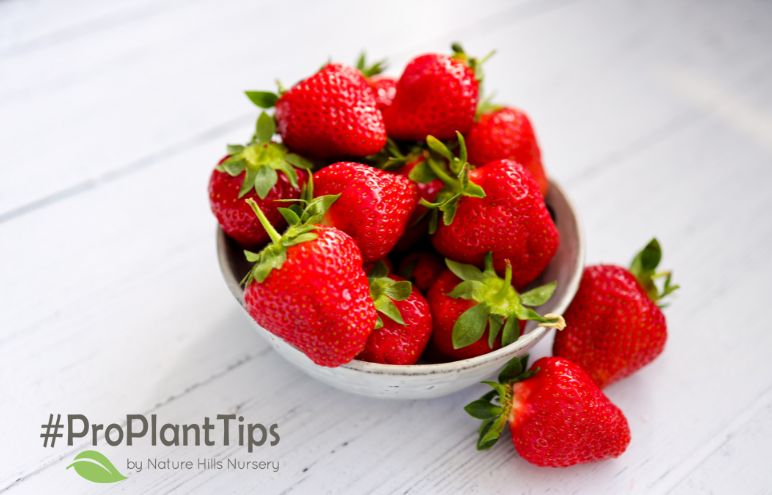
Sweet treats right in the middle of summer, Strawberries are a highly anticipated crop; one that gardens of all shapes and sizes can grow!
Read on to learn how to plant and care for them the very best, get the most fruit from your Strawberry patch, and how to maintain them!
Day length and temperatures have quite an effect on Strawberries, including when they produce fruit, so choose the best plants for your climate. Understanding the 3 main types of Strawberry will further help you select the best plant for your needs!
June-Bearing Strawberries
June-Bearing Strawberries are the more common type of Strawberry plant. This type produces the largest fruits as well as larger yields and plenty of runners. As their name suggests, they have their one big crop in the early summer.

Some Great June-Bearing Strawberry Varieties
These varieties have one big crop of flavorful fruit for your enjoyment.
- Eclair Strawberry Plant
- Allstar Strawberry Plant
- Sequoia Strawberry Plant
- Chandler Strawberry Plant
- Honeoye Strawberry Plant
Producing flower buds in late summer and sometimes again in the fall as the day length shortens, the nights become longer, and the temperatures cool down. June-Bearing Strawberries produce runners during the summer, which can be transplanted that fall or the following spring.
Everbearing Strawberries
Everbearing Strawberries (aka Ever-bearing) produce two crops a year, and in warmer climates can produce a third small crop. Also known as Short Day Strawberries, Everbearing typically have fewer runners.

Some Great Everbearing Strawberry Varieties
These varieties bring multiple crops of healthy sweet berries to your garden!
- Albion Strawberry Plant
- Quinault Strawberry Plant
- Flamingo White Strawberry Plant
- Ozark Beauty Strawberry Plant
- Jewel Strawberry Plants
Ever-bearing Strawberries often produce multiple crowns that can be transplanted that fall or the following spring to prevent over-crowding.
Day-Neutral Strawberries
Day Neutral Strawberries produce fruit throughout the growing season and are improved Everbearing Strawberries. They typically have smaller fruit like Wild Strawberries, have smaller crops that develop over the summer and fall. Day-neutral Strawberries have fewer runners
Not triggered by day length or temperatures, Day-neutral Strawberries set fruit throughout the summer, having only a break during extreme temperatures.
Pineberries
A close relative to Strawberries are Pineberries. Typically with white interiors and white exteriors blushed pink to coral. A bit smaller in size, Pineberry have red seeds for quite the contrast! The color is highly sought-after by foodies and is a hit as a niche crop at farmers' markets! Favor-wise, these hybrids between Japanese White Strawberries, have all the Strawberry flavor with a hint of Pineapple and Pear!

Pineberry/White Strawberries At Nature Hills:
- White Pineberry
- White Carolina Everbearing Pineberry Plant
Pineberries have the same look plant-wise and the same care needs too!
Wild Strawberries
The native Wild Strawberry (Fragaria virginiana) and the Alpine Strawberry (Fragaria vesca) are your typical wild berries that can be found growing in sunny waste areas and throughout your lawn as a ‘weed’ but they are still edible berries. Also called Woodland Strawberries, they typically have more seeds than flavor but ‘good patches’ you come across are often fiercely guarded by their caretakers. Wild Strawberries are fantastic lawn alternatives and lovely living groundcover.
Caring for Strawberries
Strawberry plants prefer full sun and enriched well-drained soil. Provide regular moisture to support the formation of those fat juicy fruits!
Add a layer of mulch, straw, and/or compost over the area each spring, this keeps moisture in the soil more consistently, insulates the shallow roots, makes transplanting rooted runners easier, and helps block weeds, keeping the plants stress-free.
It is best when you snip off their runners the first year your plants are in the ground. The second year, you can snip and replant your runners that have rooted elsewhere each spring, or simply pin runners into an empty space where they will be able to root without over-crowding their neighbors.
Clean the mounds or beds in the early spring to remove old foliage.
Keep Wildlife Out Of Strawberry Patches
It may be difficult to keep little kids out of your patches of ripening jewel-like fruit, but it’s easier than you might think to keep birds and wildlife from stealing away the fruits of your labor!
- Paint stones red and scatter them around your berry patch so birds get tricked into finding stones and learning to leave your berries alone.
- Cover smaller beds in mesh or floating row covers that don’t block the sunlight, yet will let air circulate.
- Use wind spinners and whirly gigs to keep
Storing and Using Strawberries
- Place berries in the refrigerator as soon as possible after picking them, gently brushing off any soil or debris. You can use a clean glass jar or bowl for best results.
- Avoid washing them until you're ready to eat. This helps the berries last around five to seven days in refrigeration. Wash under a cool, gentle stream of water when ready.
- Let them rest on the counter for about 30 minutes before eating to bring out the subtle flavors.

Fantastic on the breakfast cereal, whizzed up in smoothies, added to charcuterie boards and fruit salads. Go big and have a chocolate-dipped strawberry dessert! That’s if they make it into your kitchen in the first place as they taste great straight off the plant.
If you are unable to use your berries in time, you can always bake them into desserts, make them into preserves like jelly or jam, make Strawberry syrup, or create fruit leather!
Did you know you can make tea from Strawberry leaves? Create a flavorful tea high in iron, calcium, and Vitamin C, by steeping very fresh, well-washed new leaves or completely dry leaves for about 10 minutes. Sweeten with your favorite sweetener and sip! It purportedly aids digestion and helps with arthritis.
Start Growing Strawberries This Spring!

Time to order your Strawberries and then dream all winter about your summer harvest of juicy fat sweet berries!
Easy to grow spring-planted perennials, Strawberries are available in potted containers, or as bare-root sets and get shipped to you based on your growing zone and climate! Nature Hills has many varieties of Strawberry plants for you to choose from!
Happy Planting!

