
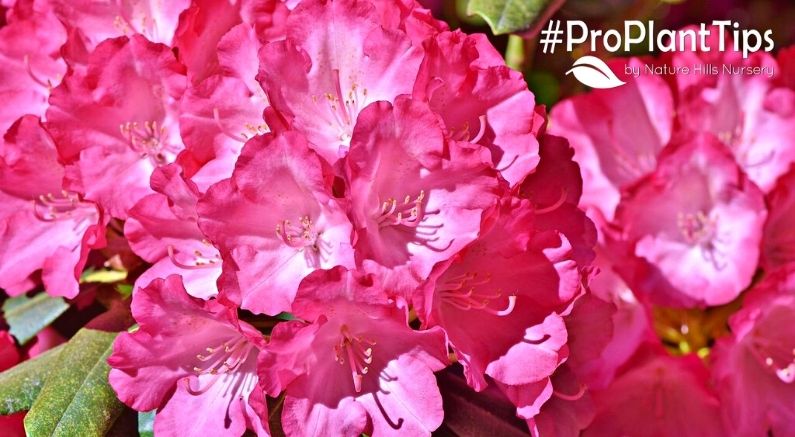
Dedicating room in your landscape to include Azaleas and Rhododendron shrubs is not a challenge - rather it is a must! Enjoy fabulous trusses of incredible flowers that are held from top to bottom of these robust, spring-flowering shrubs!
You'll find a large collection of Rhododendrons for sale at Nature Hills Nursery (which includes Azaleas) that offers many colors, sizes, and reblooming capabilities, and many different mature size options for this delightful garden staple! Some, like the Bollywood® Azalea and Ashley Marie Girard Azalea, have delightful variegated foliage!
Bloom colors range from pure white to pinks, yellows and oranges, reds, and many purple hues! Some have showy blotches, stripes and speckles of color at the throat of the flower adding to the visual impact of several cultivars! It's said these entice pollinators and Hummingbirds to come for a visit.
The Difference Between Rhododendrons & Azalea
All Azaleas are included in the Rhododendron genus. However, not all Rhododendrons are Azaleas. Rhododendrons are found in the wild across much of the mountainous regions. In America, miles and miles of native "Rhodys" light up the Appalachian Mountains in springtime!
Featuring a few differences, most Rhododendrons are broadleaved evergreens (with a couple of exceptions) that add year-round beauty to your landscape.
Azaleas are deciduous, so they will lose their leaves in the fall and will display great fall color before dropping their leaves in late fall.
Rhododendrons are typically larger, evergreen shrubs. Unlike Azaleas, Rhododendrons hold their bell-shaped blooms in rounded flower clusters above ovate foliage.
Typically, varieties with larger leaves (more than 3 inches long) also sport larger flowers. But hybrid varieties can and do deliver a wonderful mix of attributes from both parents.

Spring Flowering Time!
Among the first blossoms of the year, these vigorous trumpet-shaped bloomers are a breath of fresh air after a long, dreary winter.
Look closely, as Rhododendron blooms feature many more stamens than Azaleas do. Of course, there are more than 1,100 varieties of Rhododendrons. You can just imagine the vast spectrum of Rhododendron types of flowers across that wide range!
Top 5 Favorite Rhododendron Shrubs

A member of the ‘Ironclad’ series of Rhododendrons that is low-maintenance and easy care for beginner and busy gardeners alike! The lavender trumpet-shaped blooms are both heat and cold-hardy!

Vivid peachy pink and creamy yellow blooms are held in tight bunches for an incredible evergreen shrub perfect for hot growing zones!
3 Anah Kruschke Rhododendron

Durable Anah Kruschke Rhododendron performs beautifully in USDA growing zones 5 to 9. With red-throated purple blooms, these are incredible evergreens that handle sticky hot climates with ease!

The scintillating Nova Zembla is a crowd favorite of garden guests, butterflies and hummingbirds alike! The near red blooms of this dense shrub feature evergreen foliage for year-round appeal.

The P.J.M. Rhododendron is an evergreen with lavender-colored blooms that are heat and cold tolerant, long-lived, fragrant and even has fantastic fall color! This all-in-one plant is mid-sized and breathtaking!
Honorable mentions

The vigorous White Catawba Rhododendron enjoys a reputation for being an easy-care and dreamy white flowering shrub!
Top 5 Favorite Azalea Shrubs
#5 - Pink and Sweet Azalea

Baby pink blooms and is finer textured than the average Azalea, Pink and Sweet has a spicy-sweet fragrance and red fall color!
#4 - Hino Crimson Kurume Azalea

With fiery red blooms and smaller stature, Hino Crimson has profuse blooms that are prized by Hummingbirds and butterflies. Long-lasting flowers in vivid hues are sure to make up for their smaller height!

Bold red-hot blooms for hot climates are a fantastic combo for a high-impact flowering shrub! One of the few evergreen Azalea, you’ll enjoy year-round green foliage to boot!
#2 - Encore® Reblooming Azaleas

Heavy blooming plants that have an encore flush of flowers after the initial spring bloom, These smaller reblooming Azaleas feature 29 different colors and little maintenance requirements!
#1 - Bloom-A-Thon® Azaleas

Evergreen, easy-care, and long-blooming, Bloom-a-Thon Azaleas are fantastic all round shrubs that feature striking flowers in spring, another flush in summer and continue flowering until frost! These disease-resistant shrubs often feature double blooms for your added enjoyment!
Honorable mentions:

The Alaska Azalea and Southern Charm Azalea are incredible Azaleas for the hot growing zones. And the Gibraltar Azalea and Fireball Azalea feature huge juicy orange blooms!

How to Choose
Choose your favorite flower color, or filter by mature height and USDA hardiness zone to see the best types of Rhododendron to use in your area. You can also reach out to your local Agriculture Extension office to get expert local advice - for free!
Are Rhododendrons Hard to Grow?
Planting a Rhododendron bush is so easy! Remember that all Azaleas are under the Genus of Rhododendron, but not all Rhododendrons are Azaleas. They both prefer the same growing conditions:

Location
Best place to plant Rhododendrons is to provide in protected locations where they won't be exposed to wind, which can dry out these evergreen plants. Cold, dry northern winter winds can cause windburn and dry them out. If you are in this situation, use an anti-desiccant each fall according to package directions.
Sun
These do need to have some sun to make the best flower display. Evergreen Rhododendron bloom best in full sun or partial shade, with at least four hours of sunlight a day.
Some will flower in shade and others tolerate full sun. Study the Plant Highlights to determine the best plants for your home.
Soil & Fertility
Plant Rhododendrons in rich, acidic soil; conduct soil testing as needed. Your soil needs to be slightly acidic and should drain well.
The American Rhododendron Society recommends a soil pH between 4.5 and 6. If you have alkaline soil, consider growing your Rhododendron in garden containers with an acid-lovers soil mix.
Likewise, consider an annual application of an organic, slow-release fertilizer that helps maintain soil acidity for blooming plants.
Water
These mountain natives resent having soggy roots. Mound up with additional soil, or plant them high to improve drainage. Look for a higher elevation on your lot, if needed where the water will shed quickly away.
Their root systems are shallow, so keep the surrounding area weeded and mulched. They will appreciate Nature Hills Root Booster to support the tiny feeder roots.
Take care of an Azalea or Rhododendron bush with consistent watering to keep them stress-free. This is especially important for large potted Rhododendrons.
Mulch
Add pine needles or other arborist wood chip Mulch over the roots to keep them healthy. Reapply as needed each year, and keep the mulch away from touching the main stems.

Rhododendron Pruning

Once your Azalea or Rhododendron is done blooming - that is the only time of the year it can be pruned without sacrificing flowers for the next spring! For reblooming varieties, only prune after the spring bloom.
Once the flowers are done, prune any branches that need to be shortened up and then leave these shrubs alone for the rest of the year. They do respond well to pruning.
Remember that Rhododendron will bloom on old wood from last year, so don't delay. Pruning at other times of the year will eliminate the flower buds that have already been formed at the branch tips.
Study the Plant Highlights to see how tall each Rhododendron variety will grow. Plan for their mature size, taking both height and width into account to avoid creating an annual pruning task to control size.
Best Place to Plant Rhododendrons and Azalea
Privacy and Screening

You'll cherish a long row of large Rhododendron varieties as a privacy hedge. Create a private garden room with several tall Rhododendron bushes curved allée around your outdoor seating areas. A boost of Rhododendron privacy is a boon in today's hectic world. Rest and relax in a lush space all year long.
Try the bright orange buds and lemon yellow blooms of Sunbow® Solar Flare™ Azalea!
Densely branched, rounded shrubs can be used in long formal hedges. Measure from the center of one to the center of the next, using the smallest number given for the mature spread. You’ll find the mature spread and other details in the Plant Highlights section on the product pages of our website.
Facer Plants & Edging

If you have mature trees on your property, keep Rhododendron evergreen shrubs as a wonderfully informal mass in the understory layer, like the rosy-pink Haaga Rhodie. You’ll hide the bare leggy stems of larger trees and shrubs, plus add dimension and color to uplift these larger garden residents.
Pop small Rhododendron bushes near your walkway or path, or line your home’s foundation for a fantastic burst of curb appeal like the lovely Korean Rhododendron! Use as a backdrop to other smaller garden plants to add contrast and create uplifting formal appeal.
Containers

Bring plenty of drama to partially shaded porches or patios with smaller Azalea and Rhododendron shrubs! Large planters and balcony pots add color, privacy and block wind anywhere!
Try a purple Polarnacht Rhododendron, or Black Hat® Rhododendron. These dwarf shrubs can also be grown in oversized outdoor containers for 20 years or more with proper care!
These durable shrubs add value to your property. Can't choose a flower color? Plant combinations or start your own Azalea and Rhododendron collection by grouping varying sizes together to create vignettes and fantastic colors - like the large blooms of the buttery yellow Holden's Solar Flair Rhododendron!

Mix and match your favorites for a bespoke look that is customized to make you smile. Use light-colored flowers further away to make your property look larger. Don’t forget to include some reblooming varieties for more blooms later in the season!
Garden Accents
Rhododendrons will become an inspired structural element of your garden design. When Rhododendron bushes are in bloom, these prima donnas take their place as unmistakable focal points and garden anchors!
They also make terrific accent plants! Try one near your entrance, or run a hedge along the length of your side yard. The effect of that world-renowned Rhododendron charm can't be understated!
- Cutting gardens - Try the ombre Rhododendron Hachmann's Polaris
- Cottage borders - Try the darling Rosebud Azalea
- As backdrop shrubs
- Specimen plants - Go vertical with the Autumn Ruby® Encore® Azalea Tree
- Perennial beds
- Hummingbird and pollinator plantings - The fiery red Girard's Crimson Azalea
- Shade Gardens
- Moon Gardens - Try dreamy white Girard's Pleasant or Cascade Azalea
- Rock Gardens
- Asian-Inspired/Zen Gardens

Azalea and Rhododendron Flowering Time!
Add a single specimen or go for a collection of these spectacular early spring-blooming shrubs! Order from Nature Hills Nursery for happy, healthy selections of high-quality Rhododendron bushes. Our expert growers adore the vibrant Rhododendron family as much as you will!
We only ship Rhododendrons and other plants when the growing time is right in your area. That means it's fine to plant your new Rhododendron shrubs as soon as you receive them. In warm weather, ensure your new plants receive careful watering.
Can't get enough of our Azaleas and Rhododendrons? Watch our Top 5 video!
