Free Shipping on Orders $199+

Growing Zone: | Garden in
Find your Growing Zone!

Top 5 Prettiest Peony Varieties!

Top 5 Prettiest Peony Varieties! - Nature Hills Nursery

Charlotte Weidner |

Peonies have been grown for thousands of years and were in cultivation in China more than 2000 years ago. The Greeks, the Japanese, Emperor Charlemagne, and 15th-century English literature all mentioned or used Peonies for beauty or medical purposes.

In the United States, Thomas Jefferson mentioned working with and breeding peonies. Peonies are great beauties, very colorful, long-lived, and quite hardy. There may be a few landscapes that would not be enhanced with a Peony.

Peony Care & Info

Peonies prefer a sunny, well-drained location. They will tolerate some shade but will bloom more prolifically in the sun. Peonies do not like to compete for moisture and nutrients with large trees or big shrubs. Plant them away from such competition.

They prefer to be planted in a neutral soil pH, with a pH of 6.5 being optimum. Peonies are not heavy users of fertilizer. An application of a slow-release fertilizer every several years should be sufficient. Available as both bareroot and container plants, you’ll find a Peony that’s perfect for you!

Peony won’t need much care or maintenance. Deadhead blooms after they fade (if you’ve not snipped them all for indoor bouquets already), and let the foliage remain on the plant until autumn, when the foliage yellows. At this time, it is safe to snip the foliage off near the ground and remove the trimmings from the area.

Nature Hills offers a variety of Peonies! While they are all gorgeous and fragrant, here are the top 5 highest-rated Peony varieties!

    • Deer & Rabbit Resistant
    • Full Sun Lovers
    • Easy Care & Low Maintenance
    • Great Cut Flowers
    • Long-Lived & Extremely Cold Hardy


Nature Hills Nursery Top 5 Peony Varieties

#5 Festiva Maxima Peony

white peony

Glorious white whipped cream poufs of petals are what make up the Festiva Maxima Peony! Divinely fragrant and accented with hot pink to reddish edges in the centers of each enormous double bloom, it adds dreamy elegance!

These ruffled wonders are a gleaming gardener's favorite in the garden and as cut flowers for bouquets! The creamy, dreamy white blooms are bridal quality!

#4 Coral Charm Peony

Coral Charm

Gorgeous bowl-shaped petals surround a frilly golden yellow center of these coral-hued silky petals. These are lightly fragrant and have long-lasting blooms that have won awards for their exceptional color! This is a perfect mixture of orange and pink; the blooms fade to a delicate hue as they age.

Perfect cut flowers and vibrant garden addition to the bed or border to attract pollinators galore! The inward curving petals are lovely landing pads for bees and butterflies!

#3 Bartzella Itoh Peony

yellow peony

Yellow is a rare color for Peonies, and the Bartzella Itoh Peony is a buttery soft shade of this sunny color! Double blooms open to display an orange eye with yellow stamens for a lovely bit of contrast! These are a unique hybrid cross of a Tree Peony and Herbaceous Peony; the ferny foliage and larger blooms herald their Tree Peony parentage.

Just like the color of the petals, these blooms have a light lemony scent! Long-lived and cold-hardy, it’s no wonder this unique Peony has earned the #3 spot on our list!

#2 Sarah Bernhardt Peony

Sarah peony

Creamy pink that fades at the edges of each voluminous petal of these baby pink blooms that are gorgeous and extremely fragrant! Named for the French actress, these huge blossoms take on a two-tone effect as the petals fade as layer upon layer of petals open to reveal pompoms of lovely blooms.

Grown for over a hundred years, Sarah Bernhardt is more disease-resistant than most and extremely cold hardy and long-lived, like its cousins, and forms rounded bunches of foliage that look handsome for the rest of the growing season.

#1 Kansas Peony

Kansas Peony

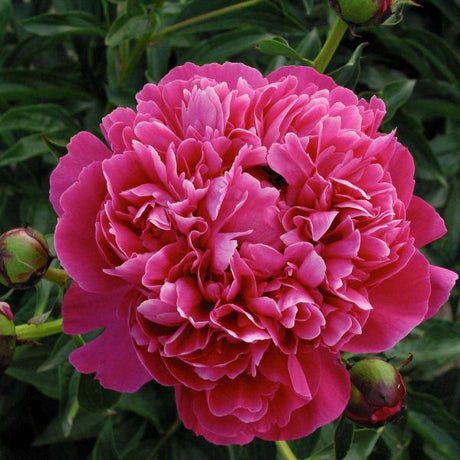
Bold double blooms of ruffled silky petals, the Kansas Peony takes the number one spot on our list because of its heavenly fragrance and bold pink hue that’s so dark it’s almost a scarlet red! Strong stems and glossy green foliage these are garden must-haves that add bright pops of color to the landscape that won’t fade in the sun!

Strong and durable, these plants live for over 50 years and are among the easiest to care for and the highest in disease resistance available! They have everything you could hope for in an ornamental flowering perennial!

Honorable Mentions:

honorable mentions

Butter Bowl - Bowl-shaped blooms with baby pink outer petals a creamy buttery yellow inner petals

Shirley Temple - A smaller plant with loads of smaller blooms in baby pink and white! As cute as the child actress it’s named after.

Karl Rosenfield - So dark pink it’s almost scarlet red, this large double bloom appears to have stacked layers of ruffled petals!

Red Charm - An unusual red double bloom is are dramatic bloom that won’t fade!

Raspberry Charm - Early blooming bowl-shaped blooms that are long-lasting in bright raspberry red with yellow centers!

You will never be sorry for planting several Peonies in your garden and landscape! With fragrance, color, and silky petals plus lovely foliage, you won’t go wrong! Order your flowering ornamental perennial plants from NatureHills.com today and get your garden blooming with help from our experienced and knowledgeable horticulture staff!

Happy Planting!

Shop Peonies
Previous Next

Compare Plants

Browse the features and specs side-by-side to find the best fit for your garden.

A table comparing the facets of 1 products
Facet
Kansas Peony
Kansas Peony
View details
Rating
Rating
(1)
Type
TypePerennial
By
ByNature Hills Nursery
Flower Color
Flower Color
  • Red
Growing Zone Range
Growing Zone Range
3-8
Mature Height
Mature Height
2-3 ft
Width
Width
2-3 ft
Price
Price
Regular price $7460

Frequently Asked Questions

Can you plant peony bulbs in the spring?

Peonies are not grown from bulbs but from roots or crowns, and they should be planted in fall (September through October) for best establishment. Spring planting is possible but not recommended, as peonies prefer a cold dormant period and may struggle to bloom the first year when planted in spring. Fall planting allows the roots to establish before winter and ensures better blooming performance the following season. For optimal results, plant peony roots in fall when soil temperatures have cooled but before the ground freezes.

How long does a peony plant live?

Peony plants are exceptionally long-lived perennials that can thrive for 50-100 years or more when properly established, making them true heirloom plants that can be passed down through generations. These hardy perennials are extremely cold tolerant and will reliably return each spring in USDA zones 3-8. Once planted in a sunny, well-drained location with neutral soil (pH 6.5), peonies require minimal care and will actually become more robust and produce more blooms as they mature over the years. Plant your peony in a permanent location since they dislike being moved once established.

How many types of peonies are there?

There are three main types of peonies: herbaceous peonies (which die back to the ground each winter), tree peonies (woody shrubs that maintain their structure year-round), and intersectional or Itoh peonies (hybrids combining traits of both types). Herbaceous peonies are the most common and hardy in zones 3-8, while tree peonies thrive in zones 4-8 and can reach 3-5 feet tall. Browse Nature Hills' peony collection to find the perfect variety for your garden's conditions and bloom preferences.

How deep should I plant peony roots so they bloom properly?

Peony roots should be planted with the crown (where the shoots emerge) no more than 2 inches below the soil surface in most climates. In zones 7-8, plant even shallower at 1-1.5 inches deep, as deeper planting prevents blooming. Plant bareroot peonies in fall, 6-8 weeks before hard frost, ensuring the growing eyes face upward. Mark the planting location since peonies may not emerge until late spring their first year.

When is the best time to plant bare root peonies?

The best time to plant bare root peonies is in early fall, typically September through October in zones 3-8, when soil temperatures have cooled but the ground hasn't frozen. This timing allows the roots to establish before winter dormancy and ensures strong spring growth. Plant bare root peonies with the eyes (buds) positioned 2 inches below the soil surface in well-drained, sunny locations. Water thoroughly after planting and apply a light mulch layer for winter protection.

How much sun do peonies need for the best flowers?

Peonies prefer full sun locations and will bloom most prolifically with 6-8 hours of direct sunlight daily. While they tolerate partial shade, reduced sun exposure results in fewer flowers and weaker stems. Plant peonies away from large trees and shrubs that compete for light and nutrients. Choose the sunniest, well-drained spot in your garden for maximum bloom production.

What kind of soil is best for growing peonies, and how do I amend it?

Peonies thrive in well-drained soil with a neutral pH of 6.5, and they cannot tolerate wet or waterlogged conditions. To amend heavy clay soils, work in 2-3 inches of compost or aged manure to improve drainage, while sandy soils benefit from organic matter to retain moisture. Plant peonies away from large trees and shrubs that compete for nutrients and water. Test your soil pH first and add lime to raise acidic soils or sulfur to lower alkaline soils to achieve that optimal 6.5 pH level.

Why won't my peonies flower even though they have healthy foliage?

Peonies with healthy foliage but no blooms are typically planted too deep, as peony eyes should sit only 1-2 inches below soil surface in zones 3-8. Other common causes include insufficient sunlight (they need 6+ hours of direct sun), overfertilization with nitrogen, or immature plants that need 2-3 years to establish. Check your planting depth first and ensure your peonies receive full sun with well-drained, neutral soil (pH 6.5) for optimal flowering.

How far apart should I space peony plants when planting multiple?

Plant peonies 3-4 feet apart to allow proper air circulation and prevent overcrowding as these long-lived perennials develop into substantial clumps over time. This spacing accommodates their mature spread of 2-3 feet and reduces competition for nutrients and moisture, which peonies particularly dislike. For hedge plantings or mass displays, you can space them closer at 2.5-3 feet apart, though this may require more frequent division every 10-15 years to maintain plant health.

Can peonies be planted near trees or shrubs, or do they compete?

Peonies should not be planted near large trees or shrubs as they dislike competing for moisture and nutrients. These flowering perennials perform best when given their own space in full sun locations with well-drained soil. For optimal blooming, plant peonies at least 3-4 feet away from established trees and large shrubs to ensure they receive adequate resources and sunlight.

Find Your Garden's Growing Zone!

Your Current Growing Zone:

Zone

ZIP Code:

✓ Growing Zone Set Successfully!

Your zone has been saved and will be used throughout the site.

⚠ Unable to locate a growing zone for that ZIP code.

Please check your ZIP code and try again.

Looking up your growing zone...

When ordering a tree or plant, make sure to know your planting zone.

You can determine your garden's USDA hardiness zone by entering your Zip Code below.