
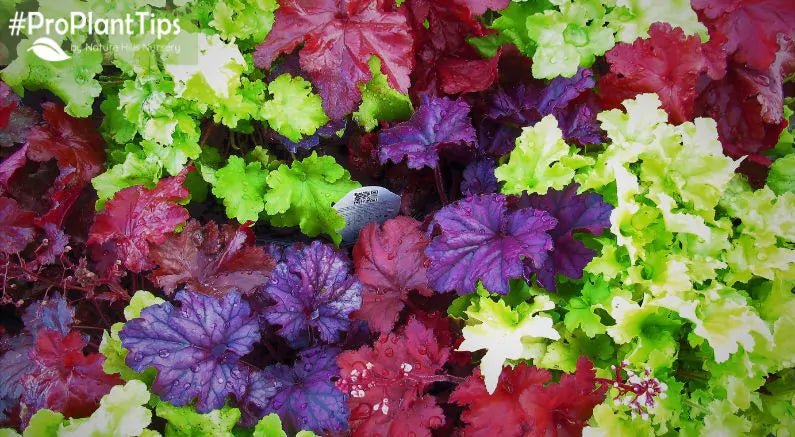
Frilly, textured, coarse foliage in eye-popping colors seems to grow in contrast to the most delicate, airy, and dainty little blossoms ever! There’s just something about Coral Bells in the garden!
There has been extensive work done hybridizing and selecting new introductions of Coral Bells. The old-fashioned Alum Root selections were basically grown for the airy wispy flowers born on long wiry stems that hold the flowers above the foliage.
While there are still some selections of Coral Bells that were selected for the flowers, now many modern selections have been introduced for the incredible leaf color, with a dizzying array of different species and new hybrids for you to choose from!
Check out Nature Hills' favorite Coral Bells and how to keep your favorites looking their best!
All About Coral Bells

There are around 55 species of Heuchera and all are natives to North America! Also known as Alum Root or Alumroot, or called Rock Geranium, Coral Bells belong to a genus of the herbaceous family of Saxifragaceae. Heuchera is named after a German physician named Johann Heinrich von Heucher.
Coral Bells come in a myriad of colors from yellows, oranges, silver, reds, pinks, and purples of many shades and combinations. They are wildly attractive herbaceous perennials but have become more commonly used as landscape plants and en masse plantings!
The foliage has pointed lobes and deep, exaggerated venation, often with different colors to really show off their heavily textured leaves! Many can remain semi-to-fully evergreen in mild winters and warmer climates, which for this family is far and wide. With some tolerating chill down to USDA zone 3, and others handling up to zone 10!

With colorful stems and wonderful spreading mounded forms, Coral Bells won’t take up much space but have high-impact color to make up for their space-saving nature! All have striking, prominent veins and deeply pointed lobes with dramatic stem colors to match!
The dainty flowers are held atop wiry, slender stems that often match the color of the foliage. The flowers can be a range of pink, white, or their namesake coral hue! The graceful and airy ‘bells’ are a delight to every Bee and hummingbird in the area! They are great cut flowers to add to your arrangements too!
Coral Bells in the Landscape

Many Heuchera are grown predominantly for the amazing foliage colors! At some point, they do send up flower stalks and they do bloom. Adding both a coarse and airy feel to the sun or shade garden, these unique flowering foliage plants embrace their duality and add considerable interest to the garden well into the autumn and even winter in areas with mild winters! Ideal in the full shade garden and partial shade landscape, Coral Bells light up the garden with their color and elegant blossoms! You’ll have more vibrant colors in cooler zones in more sun, but prevent sun-scorch by planting in afternoon shade in hot climates.
- You’ll love seeing Champagne Coral Bells' vibrant foliage color peeking out through the frost and gloom of the dreary autumn landscape, or Lime Rickey as it adds a shock of color to the shade!
- Add these dainty blooms and lively colors to a Fairy Garden or Children's Garden to help inspire their imagination! Or enjoy soda-fountain-worthy bubbly color to foundation plantings, Rock Gardens, and throughout the dry shade garden like Cherry Cola or Root Beer. They’ll root on slopes, spill over the tops of retaining walls, or creep through the crevice garden in rock walls
-
Fantastic frilly edging along garden beds, the ruffled foliage of Longflower Alumroot adds a native touch to your garden transitional points. Happy rambling under larger shrubs or trees in their shade as facer plants and lacy skirting around their bases, or under an urn or sculpture, Coral Bells add three to four seasons of color, and even vibrant fall color! For year-round autumn vibes, try Zipper or Southern Comfort!

- Mixed perennial gardens and cottage borders gain incredible highlights, while mixed containers and planters gain a vivid accent and filler! Add exotic pops of color to poolside decks with the likes of the juicy Berry Smoothie, or Miracle Coral Bells.
- The silvery foliage of Silver Scrolls or Peppermint Spice Coral Bells will add cool calming vibes to your shade gardens and Moon Gardens! Gain a brooding look with the silver-purple Spellbound or purple-black of Obsidian Coral Bells.
- Pop rows or groupings into pollinator gardens and cut flower gardens where both the flowers and the leaves will look great in your cutting garden! The gorgeous, uniquely variegated Snow Angel Coral Bells will grace your floral bouquets beautifully, and Berry Timeless Coral Bells will become the feature focal point of a floral arrangement! Both have ample nectar for bees, butterflies, and even Hummingbirds!
Top 10 Coral Bells at Nature Hills!

- Primo® Black Pearl has unbeatable deep purple-black foliage!
- Midnight Rose has deep purple color with pink color-changing spots on the leaves
- Berry Smoothie has incredibly bright pink and rose blend foliage colorful all season
- Peach Flambé has peachy red foliage that really stands out!
- Green Spice has green leaves with a silvery overlay and very pronounced purple veining
- Snow Angel has green and cream-variegated foliage and rosy blooms and stems
- Triple Treat is a trio of three fantastic varieties in Lime, Purple and Red!
- The heat and cold-tolerant Northern Exposure™ Coral Bells handle zones 3 to 10!
- Lemon Supreme has lemony chartreuse foliage
- Berry Timeless Coral Bells have outstanding pink and white blooms that take the cake!
Coral Bell Care
Heuchera can grow in some sun or shade, but most will have the best foliage color and bloom best in 4-6 hours of sun. The key to success is well-drained soil and water as needed to keep the plants stress-free. It is also important not to plant them too deep in the soil.
Removing the spent blooms keeps your Coral Bells looking clean and attractive. Some people like to cut the flowers as they arise and immediately use them in flower bouquets, maintaining them as foliage plants only in the landscape. Not a bad option, and a reliable source for bouquet fillers! But if you leave them in the landscape, your pollinators will relish them!

Coral Bells appreciate moderate, consistent moisture and thrive in enriched soil that is slightly acidic. All plants appreciate a 3-4 inch thick layer of arborist mulch to hold in moisture and keep the roots cool.
These herbaceous Perennials my die back in cold winters, but you can leave the foliage in place to act as additional winter protection and selectively prune out winter damaged foliage in the early spring before new growth emerges for a clean, tidy start to the year.
It is very important never to plant Heuchera too deep in the ground as they hate that. Root division every 3-5 years keeps the growth vigorous and prevents the roots from becoming overgrown and competing with themselves.
Once established, Coral Bells are:
- Drought tolerant
- Cold-hardy, heat, and humidity tolerant
- Seldom bothered by deer or rabbits
- Low maintenance and easy to grow
- Juglone-tolerant, Coral Bells can be planted beneath Black Walnut trees
- Somewhat Salt/Coastal/Saline tolerant
- Very adaptable
Gorgeous Coral Bells!
With brilliant color, dramatic foliage, and dainty bell-shaped blooms, Coral Bells are must-haves for the garden and highly valued assets to the landscape!
There’s not a niche these gorgeous plants fill in your world, indoors and out, yard or no yard at all! Check out all the fantastic Heuchera available at Nature Hills and check back often to see all the exciting new varieties that are in store for our enjoyment in the future!
Happy Planting!

