
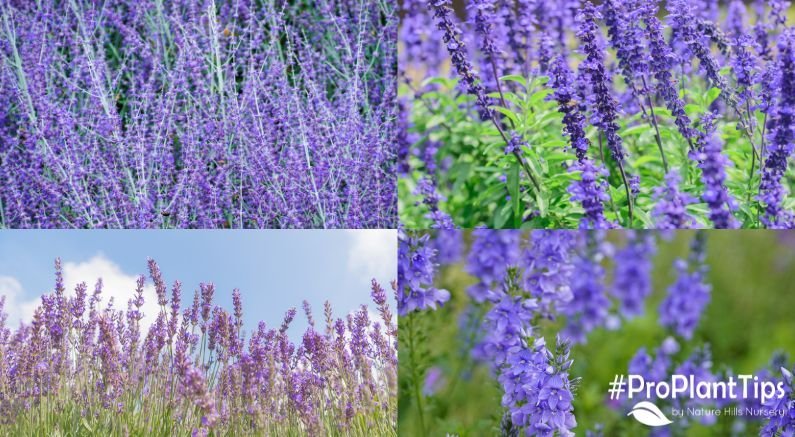
What's the difference between Russian Sage, Salvia, Lavender, and Veronica? While these popular perennial flowers all produce beautiful upright spikes of blooms, they differ significantly in fragrance, growing requirements, and plant family!
Fellow gardeners, let me tell you about four of my absolute favorite spire-flowering perennials!
These gorgeous plants will transform your garden into a pollinator paradise while giving you months of stunning vertical color. Once you understand their unique characteristics, you'll know exactly which ones belong in your space!
Why These Spire Flowers Are Garden Gold!
All four are herbaceous perennials that produce nectar-rich flower spikes that butterflies and bees absolutely adore. Three belong to the Mint family (Lamiaceae): Russian Sage, Salvia, and Lavender, sharing aromatic leaves and square stems
Veronica stands apart in the Plantain family with round stems and glossy, non-fragrant foliage.
Russian Sage grows 3-5 feet tall with silvery foliage. Salvia offers the most color variety (12-24 inches), and Lavender provides the strongest fragrance. All three handle the hottest, driest conditions around! While Veronica thrives in moister conditions with glossy green leaves!
Russian Sage: Towering Airy Beauty

Don't let the name fool you: Russian Sage isn't Russian or a true sage! This stunning perennial hails from Afghanistan and Pakistan but has been enchanting gardeners since the 1840s.
- Scientific name: Salvia yangii (formerly Perovskia atriplicifolia)
- Height: 3-5 feet tall
- Bloom time: July through October
What makes Russian Sage special? Those incredible airy, branched spires that dance in every breeze! The tiny tubular flowers open gradually from bottom to top, creating weeks of continuous color in lavender-purple hues. Even after blooming, the silvery stems hold their beauty until frost.
Growing tips:
- Loves full sun and drought conditions once established
- Perfect for xeriscaping and Mediterranean gardens
- Excellent for back-of-border plantings or mass displays
- Handles heat, wind, and poor soils like a champion
The airy, aromatic foliage creates beautiful gray-green clouds that provide structure even when not blooming. I plant Russian Sage wherever I need height and movement in the garden!
Loving full sun and having low moisture needs once established, these are fantastic in Cottage Gardens, commercial sites, Mediterranean and Xeric gardens, as well as in cutting gardens! Their low-maintenance nature means Russian Sages are fantastic en masse, as back-of-the-border accents, in the sidewalk or street-side hell strip, as prominent specimens, and in winding rows or drifts.
Salvia: The Versatile Sun Superstar

There are both perennial Sage, aka: Salvia, and “annual” Salvia known as Bedding Sage in this broad family of plants. Pineapple Sage, Gentian Sage, Mexican Sage, and Scarlet Sage are actually Salvia plants! Even the Common Sage culinary herb that is a common kitchen staple, is a Salvia!
With flowers reminiscent of Butterfly Bushes, these flowering ornamentals are just radiant! Salvias are my go-to recommendation for reliable color and pollinator appeal. Salvia works great in sun gardens, xeric plantings, and cottage gardens alike! These are great clump and mat-forming plants!
- Height: 12-24 inches (perennial varieties)
- Bloom time: June through September
- Colors: Purple, blue, white, pink, red
The perennial varieties are incredibly cold-hardy (zone 3!) while annual Salvias bring tropical flair to containers.
Perennial Salvia highlights:
- 'May Night' produces deep purple spikes with dark foliage
- 'Snow Hill' offers clean white blooms
- 'Blue Hill' delivers almost neon blue petals
The lipped, lobed petals create perfect "landing zones" for bees and butterflies. Many varieties will rebloom if you deadhead spent flowers, giving you two seasons of color!
Growing requirements:
- Full sun and excellent drainage are essential
- Moderate water needs once established
- Can spread into polite colonies
- Some varieties form spreading mats, others grow upright
Lavender: The Fragrant Xeric Favorite

Nothing beats lavender for pure sensory pleasure! Those tight terminal flower clusters on slender stems pack incredible fragrance that's both calming and energizing.
- Height: 12-24 inches, depending on variety
- Bloom time: Late spring through late summer
- Fragrance: Intensely aromatic flowers and foliage
The silvery-green foliage looks fantastic year-round.
Popular Lavender varieties:
- English Munstead Lavender (most cold-hardy)
- Phenomenal French Lavender (heat and humidity tolerant)
- Grosso Lavender (excellent for drying)
Growing secrets:
- Demands excellent drainage: soggy soil kills Lavender
- Thrives in hot, dry conditions
- Perfect for herb gardens, rock gardens, and cut flower borders
- Harvest flowers for culinary use, crafts, and aromatherapy
The key to Lavender's success? Plant it high and dry! I always amend heavy soils with gravel or sand.
Veronica: The Moisture-Loving Marvel

Veronica stands apart from our mint family trio, offering unique advantages for different garden conditions.
- Scientific name: Various Veronica species
- Height: 8-15 inches (most varieties)
- Bloom time: Early summer through autumn
- Family: Plantaginaceae (Plantain family)
Those tight "candle" spikes bloom from bottom to top, creating a fizzy texture with tiny protruding anthers.
Standout varieties:
- 'First Glory' produces royal blue candles
- 'Purpleicious' offers rosy-purple blooms
- 'Sunny Border Blue' reaches taller heights
What makes Veronica special:
- Tolerates more moisture than the others
- Glossy, dark green foliage provides excellent contrast
- Handles both clay soil and well-drained soils
- Sweet-scented flowers (though leaves aren't aromatic)
- Excellent for cutting gardens
Choosing Your Perfect Spire Flower
-

- For maximum color variety: Salvia (especially annuals).
- For fragrance: Lavender wins hands-down!
- For moister soils: Veronica thrives where others struggle
- For height and drama: Russian Sage towers above the rest
- For compact spaces: Veronica and dwarf Salvias fit perfectly
Pro Growing Tips
- Soil drainage is crucial: except for Veronica, these plants hate wet feet
- Full sun brings the best blooms: at least 6 hours daily
- Deadhead for reblooming: especially important for Salvias
- Plant in spring or fall after frost danger passes
- Group plantings create maximum impact: mass plantings look stunning!
These four magnificent perennials will give you months of pollinator-friendly blooms with minimal maintenance. Start with one variety that matches your growing conditions, then add others as you fall in love with their unique charms. Trust me, once you experience these spire flowers in your garden, you'll wonder how you ever gardened without them!
Ready to plant? Choose well-draining locations, prepare your soil, and get ready for a summer filled with vertical color and happy pollinators!
Beautiful Variations On A Theme
Gorgeous no matter what size or shape they come in, these beautiful flowering perennial plants are sure to become your favorite once you have one or all of them growing in your landscape!
Hardy and adaptable, these sun-loving and pollinator-magnets will shine in the garden and the vase, are easy to grow, and are low-maintenance gems no matter which you choose! Check out our #ProPlantTips for Caring for your perennials and squeeze every ounce of enjoyment from these beautiful specimens!
Check out these and all the other quality perennials, and more to enliven your yard and enjoy the convenience of having it shipped to your doorstep from Nature Hills!
Happy Planting!

