Free Shipping on Orders $199+

Growing Zone: | Garden in
Find your Growing Zone!

How To Prune Crape Myrtles Without Murdering Them

How To Prune Crape Myrtles Without Murdering Them - Nature Hills Nursery

Nature Hills Nursery |

Crape Myrtle (Lagerstroemia), sometimes spelled Crepe because of the crepe paper-like flowers, are incredible long-blooming plants that stand up to the summer heat! They’re deer-resistant, easy to grow and feature such incredible saturated color that not much can hold a candle to their color!

NatureHills.com offers many different kinds of Crape Myrtle plants, some are tree form, some are large shrub form plants, and our newest series includes dwarf shrubs that are hardy much farther north and can actually be grown as a perennial. We have cultivars that come in a multitude of flower colors, varied leaf color, and size.

Be sure to check out the mature sizes of the many different varieties of Crape Myrtles and select one that will fit into the space that you want to grow in. Selecting the right mature size means less pruning will be needed, and the plant will take on the most natural form.

And don’t forget to check out the new series of GreatMyrtle™ Dwarf Crape Myrtles which can be grown as perennials way down to zone 5! Imagine early, dwarf Crape Myrtle shrubs that can be cut down each spring and bloom just like the rest of your perennials.

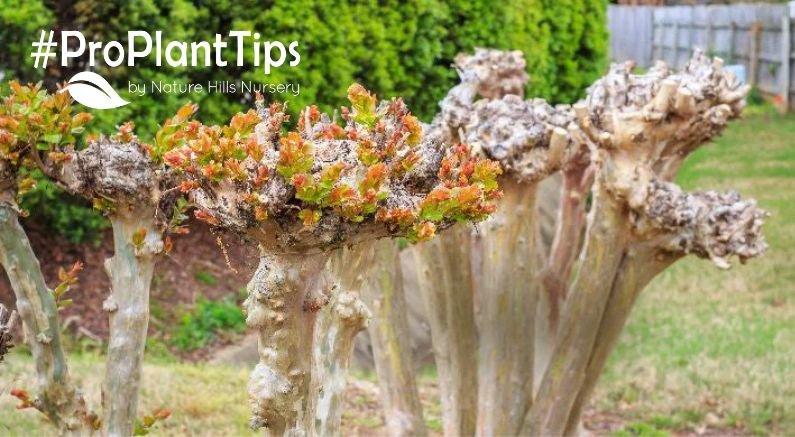
Ouch! The picture above shows a horrible "Crape Murder".

Please, don't use heading or topping cuts to pollard Crape Myrtles, it just won't give you that natural look the plant should have. You'll also avoid creating those knobby knuckles, which sadly wreck the appearance of that beautiful Crape Myrtle bark.

Instead, let's watch Ed Laivo, one of Nature Hills' horticulturalists, as he gives valuable information on how to correctly prune this beautiful tree:


What is the Right Way to Prune a Crape Myrtle

The goal is to get air circulation and sunlight into the canopy of the tree. You also want to allow your Crape Myrtle to showcase the beautiful bark as part of its character.

In the video, you'll learn when to prune Crape Myrtles and get a step-by-step approach to determine your pruning plan. Hint, start from the ground up!

Ed also walks you through a pruning tool selection guide. He'll show you exactly what types of branches you want to prune. You'll also learn what to leave on the tree.

This pruning technique retains the natural shape and form of the Myrtle without it looking like it got a crew cut!

Tools and Equipment Recommended by Ed

  • Eye Protection
  • Gloves
  • Sharp Pruning Shears
  • Tree Saw
  • Sharp Loppers for larger limbs
  • Taller trees may need a Pole Pruner

When to Prune

Crape Myrtles are best pruned when they are dormant. That means either late winter or very early spring before you start seeing new growth emerging. Flowers form on new growth so pruning before they start growing in spring will not affect the blooms.

Some newer varieties of Crape Myrtles can rebloom if you deadhead all the spent flower heads.

Where to Start

  1. View your Crape Myrtle and make a pruning plan before you begin to cut anything!
  2. Start from the Bottom and remove any suckers
  3. Remove any small tiggy growth from the trunk and from the inside canopy to open the interior for air circulation and sunlight
  4. Clean up the main portion of any main stems leading away from the main trunk of twiggy growth
  5. Prune out any crossing limbs or inward-growing branches
  6. Remove all dead, broken and diseased-looking branches
  7. Clean off any of last year's dead flower heads

Remember to leave a collar on your cuts and don’t cut flush to the bark. Ensure your cuts are clean and at a 45-degree angle from the branch.

Ed also sent over some photos of Crape Myrtles that were pruned correctly:

crape myrtle tree

Correctly pruned Crape Myrtle

hard pruned crape myrtle tree

Hard pruned Crape Myrtle done the correct way

How to Pick the Right Crape Myrtle

The first thing to do regarding pruning Crape Myrtles is to choose the right plant for your space! This will save you so much time and energy, and if you choose the right size plant for your location then you’ll eliminate how much pruning you will have to do in the long run!

Your options when choosing a Crape Myrtle are vast! From towering tall tree form, to mid-sized trees or shrubs, to neat and tidy dwarf forms. And don’t get us started on the color options these days! There’s a huge selection of not just bloom colors, but foliage colors too!

Sharpen your shears and start pruning the right way to keep these glorious trees looking their absolute best for years to come! NatureHills.com has some great #ProPlantTips for Crape Myrtle care and for pruning everything in your landscape, so stop by Nature Hills Nursery for a visit soon!

Happy Planting!

Previous Next

Frequently Asked Questions

How to deadhead crape myrtle?

To deadhead crape myrtles, cut spent flower clusters back to the nearest side branch or leaf node using clean pruning shears. Remove the entire flower head just above where new growth emerges, typically 1-2 inches below the spent blooms. Deadheading during the growing season encourages a second flush of flowers and prevents seed pod formation. For best results, deadhead regularly from midsummer through early fall to maximize blooming potential.

How to trim crepe myrtle?

To properly trim crepe myrtle, focus on thinning cuts rather than topping or heading cuts that create unsightly knobby knuckles. Remove suckers, crossover branches, and weak growth to improve air circulation and showcase the beautiful bark. Avoid "crape murder" by selecting the right mature size variety for your space initially, which reduces pruning needs. Make clean cuts at branch junctions during dormant season to maintain the tree's natural form.

What is crape murder and how can I avoid it when pruning?

Crape murder is the harmful practice of cutting crape myrtle branches back to thick stubs, typically 3-5 feet from the ground, which destroys the tree's natural vase shape and creates weak, spindly regrowth. This severe topping also removes the attractive exfoliating bark and reduces flowering potential. Instead of chopping, prune selectively in late winter (February-March in zones 7-9) by removing suckers, crossing branches, and spent seed pods while maintaining the tree's natural branching structure. Focus on thinning rather than topping, and never cut healthy branches thicker than your thumb.

What is a step-by-step plan for pruning crepe myrtles?

Start by selecting the right mature size variety to minimize pruning needs, then focus on improving air circulation and sunlight penetration into the canopy while showcasing the beautiful bark. Avoid "crape murder" by never using heading or topping cuts that create knobby knuckles and destroy the natural form. Make selective thinning cuts to remove crossing branches, suckers, and dead wood. Choose dwarf varieties like GreatMyrtle™ series for zones 5 and up if you prefer perennial-style management with annual spring cutbacks.

When to prune crepe myrtle trees?

Prune crape myrtles during their dormant season in late winter, typically February through early March before new growth begins. This timing allows you to see the tree's structure clearly and avoid removing developing flower buds that form on new growth. In colder zones where dwarf varieties like GreatMyrtle™ are grown as perennials, cut them back each spring after the last frost. Focus on removing suckers, crossing branches, and spent flower heads rather than topping or heading cuts that create unsightly knuckles.

How to trim a crape myrtle tree?

To properly trim a crape myrtle, focus on thinning cuts rather than topping or heading cuts that create unsightly knobby knuckles. The goal is to improve air circulation and sunlight penetration into the canopy while showcasing the tree's beautiful bark. Remove suckers, crossing branches, and weak growth using clean, sharp pruning tools. Select the right mature size variety for your space initially to minimize pruning needs and maintain the tree's natural form.

How to prune a crepe myrtle correctly?

To prune a crape myrtle correctly, focus on improving air circulation and sunlight penetration into the canopy while showcasing the beautiful bark. Avoid "crape murder" by never using heading or topping cuts that create unsightly knobby knuckles. Instead, make selective thinning cuts to remove crossing branches, suckers, and interior growth. Choose the right-sized variety for your space initially to minimize pruning needs and maintain the plant's natural form.

Can you cut crepe myrtles below the knuckle?

No, you should not cut crepe myrtles below the knuckle, as this creates unsightly "knobby knuckles" that ruin the plant's natural form and beautiful bark texture. This practice, known as "crepe murder," involves harmful heading or topping cuts that destroy the tree's aesthetic appeal. Instead, focus on selective pruning to improve air circulation and sunlight penetration while preserving the natural branching structure. Make clean cuts back to a main branch or trunk to maintain the crepe myrtle's graceful form and showcase its ornamental bark.

How do you prune crepe myrtles?

The correct way to prune crepe myrtles is to focus on improving air circulation and sunlight penetration into the canopy while showcasing the beautiful bark. Avoid "crape murder" by never using heading or topping cuts that create unsightly knobby knuckles and destroy the tree's natural form. Instead, make selective thinning cuts to remove crossing branches, suckers, and spent flower clusters. Choose the right mature size variety for your space initially to minimize future pruning needs.

When to prune crepe myrtles in zone 7?

In zone 7, prune crepe myrtles during late winter dormancy, typically from late February through early March before new growth begins. This timing allows you to see the tree's structure clearly while avoiding damage to emerging buds and ensuring vigorous spring growth. Wait until the last hard freeze has passed but prune before temperatures consistently reach above 50°F. Focus on removing suckers, crossing branches, and opening the canopy for better air circulation rather than topping the tree.

Find Your Garden's Growing Zone!

Your Current Growing Zone:

Zone

ZIP Code:

✓ Growing Zone Set Successfully!

Your zone has been saved and will be used throughout the site.

⚠ Unable to locate a growing zone for that ZIP code.

Please check your ZIP code and try again.

Looking up your growing zone...

When ordering a tree or plant, make sure to know your planting zone.

You can determine your garden's USDA hardiness zone by entering your Zip Code below.