Free Shipping on Orders $199+

Growing Zone: | Garden in
Find your Growing Zone!

How to Prune and Train Espalier Fruit Trees

How to Prune and Train Espalier Fruit Trees - Nature Hills Nursery

Charlotte Weidner |

Tips to Prune and Train Espalier Fruit Trees

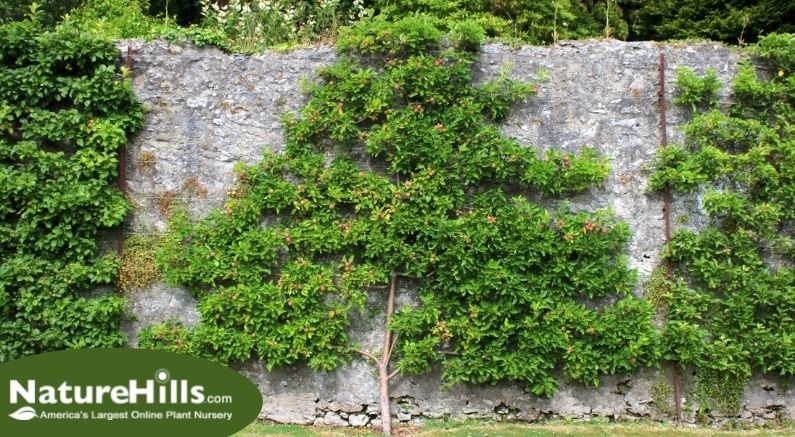
It's fun to grow healthy homegrown fruit on a sturdy trellis. The ancient technique called Espalier allows for a full harvest in a small space planting.

Espalier is now being done on Apples, Apricots, Citrus, Cherries, Figs, Nectarines Pears, Peaches, Persimmons, Pomegranate and Plums. There are few varieties of fruit that cannot be trained to grow flat. Citrus is ideal for espalier.

Watch as our High Density Backyard Orchard Culture Expert, Ed Laivo, walks you through the steps to prune and train a young pear tree growing as an espalier on a sturdy trellis.

You'll learn how far to trim back, how to tie down limbs to direct growth. You'll also see what kind of tools are required to create a "high density planting" espalier.

Benefits include the fact that you can grow several varieties of fruit trees together as a single espalier. You'll love extending your harvest season and ensuring cross-pollination.

Yes, you can grow effective espaliered fruit trees in an urban agriculture paradise or on a small, productive suburban homestead. Enjoy!

Shop all fruit from Nature Hills

Previous Next

Frequently Asked Questions

What is the best time of year to plant and initially train an espalier fruit tree?

The best time to plant espalier fruit trees is during the dormant season from late fall through early spring, typically November through March in zones 4-9. Plant bare-root trees 6-8 inches from your support structure when soil is workable but not frozen. Begin initial training immediately after planting by selecting your strongest central leader and removing competing branches, then tie the main stem to your support wire or trellis. Start bending and positioning lateral branches to horizontal wires spaced 12-18 inches apart while the wood is still flexible from winter dormancy.

How far from a wall or fence should I plant an espalier fruit tree, and why?

Plant espalier fruit trees 6-12 inches away from a wall or fence to allow proper air circulation and prevent disease issues like fire blight and powdery mildew. This spacing also gives you room to work behind the tree for pruning, harvesting, and maintenance activities. South-facing walls create the hottest microclimate and may require the full 12-inch spacing, while north-facing locations can use closer 6-8 inch spacing. Measure from the wall to where the trunk will be positioned, not the root ball edge.

How do I prune side-shoots on horizontal branches of an espalier to maintain its shape?

To maintain espalier shape, prune side-shoots (laterals) growing from horizontal branches to 2-3 buds from the base during late summer, typically August in most zones. Remove any shoots growing directly forward or backward from the branch to keep the tree flat against the trellis. For vigorous varieties like apples, you may need to prune again in late winter to control growth. Always cut just above an outward-facing bud to direct new growth along the horizontal plane.

Should I cut back previously pruned side-shoots to one leaf above the basal cluster?

Yes, cut back previously pruned side-shoots to one leaf above the basal cluster during late summer pruning (typically August). This technique, called spur pruning, encourages the development of fruit spurs and prevents excessive vegetative growth on your espalier. Make clean cuts with sharp bypass pruners, leaving approximately 1-2 inches of stem above the cluster of leaves at the base. Focus this pruning on shoots that have already been cut back earlier in the season to maintain the flat profile of your espalier.

How do I select and train the first tier of branches on a young espalier fruit tree?

When selecting the first tier of branches on a young espalier fruit tree, choose two healthy lateral branches positioned 12-18 inches from the ground that grow in opposite directions from the main trunk. Tie these branches horizontally to your trellis using soft materials like cloth strips or rubber ties, maintaining a slight downward angle of about 10-15 degrees to encourage fruit production. Remove any competing branches above and below your selected tier, and trim the central leader to about 12 inches above the first tier to promote the next level of growth. Begin this training process in late winter or early spring when the tree is dormant for best results.

At what length should I bend new branches to the guide wires without breaking them?

New branches should be at least 12-18 inches long before bending them to guide wires to ensure they have enough flexibility without snapping. Young, green growth from the current season bends most easily, while older woody stems become brittle and prone to breaking. Always bend branches gradually over several days rather than forcing them into position all at once. Start training in late spring through early summer when the wood is still pliable and actively growing.

How often should I prune spurs during the growing season to keep espaliers neat?

Prune espalier spurs 2-3 times during the growing season to maintain their compact form and encourage fruit production. Make your first pruning in late spring after initial growth, cutting new shoots back to 3-4 leaves, then repeat in mid-summer and early fall. Focus on removing vertical water sprouts and shortening lateral branches to 6 inches or less. Regular spur pruning keeps your espalier flat against the trellis and directs energy into fruit development rather than excessive foliage.

What age plant is best for starting an espalier, and should I avoid older branched trees?

Young, unbranched whips or trees with minimal branching (1-2 years old) work best for starting espalier training, as their flexible wood responds well to shaping and direction. Older, established trees with thick, rigid branches are much harder to train and may not adapt to the horizontal growth pattern required for espalier forms. The ideal starting point is a bare-root tree planted in late winter or early spring when the wood is most pliable. Begin training immediately after planting by selecting your main horizontal branches and removing competing growth.

Which fruit trees are easiest for beginners to espalier, like apples versus peaches?

Apples and pears are the easiest fruit trees for beginner espalier training because they have naturally flexible branches and respond well to pruning in zones 4-8. Citrus trees are also excellent for beginners in zones 9-11 since they're naturally compact and forgiving. Peaches and other stone fruits require more precise timing and are prone to disease when heavily pruned. Start with a young apple or pear tree and practice basic horizontal training before moving to more challenging stone fruits.

How far apart should I plant multiple espalier fruit trees on a trellis?

For espalier fruit trees, plant them 6-8 feet apart on a trellis to allow adequate air circulation and sunlight penetration while maximizing your growing space. Dwarf rootstock varieties can be spaced closer at 4-6 feet apart, while semi-dwarf and standard rootstock need the full 8 feet or more. The spacing also depends on your chosen espalier pattern - formal cordons require less space than complex palmette designs. Start with wider spacing as a beginner, since you can always add more trees later once you master the pruning and training techniques.

Find Your Garden's Growing Zone!

Your Current Growing Zone:

Zone

ZIP Code:

✓ Growing Zone Set Successfully!

Your zone has been saved and will be used throughout the site.

⚠ Unable to locate a growing zone for that ZIP code.

Please check your ZIP code and try again.

Looking up your growing zone...

When ordering a tree or plant, make sure to know your planting zone.

You can determine your garden's USDA hardiness zone by entering your Zip Code below.