Free Shipping on Orders $199+

Growing Zone: | Garden in
Find your Growing Zone!

Planting With Penstemons: Which to Use and Why?

Planting With Penstemons: Which to Use and Why? - Nature Hills Nursery

Nature Hills Nursery |

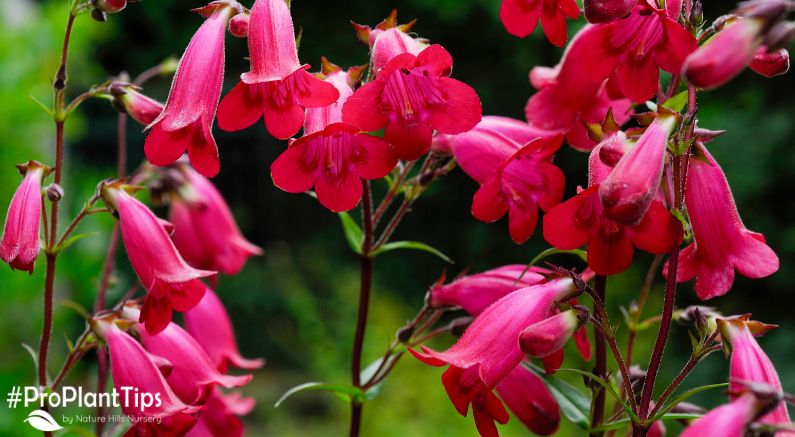
Beardtongue is a large genus of North American and Eastern Asian flowering plants. A popular and attractive flowering herbaceous perennial, Penstemons display loosely arranged spikes of tubular flowers in early to mid-summer!

With 280 species in the Plantain family (Plantaginaceae), these perennials typically have two-lipped tubular flowers that look like little mouths. Penstemons are better known by their common name Beardtongue because the lower petals (sometimes the entire flower) have furry landing strips that look like 'beards'!

This plant has an array of trumpet-shaped blooms that come in white, pink, red, blue, and purple. Rising above a clump of foliage that can range in shape and size from the lower rosette to the upper stems, many new cultivars have extra colorful to nearly black leaves! Some varieties offer rebloom if deadheaded, while others like to keep the seed heads on for added interest in the landscape.

Learn why the pretty Penstemon was alluring enough for The American Penstemon Society to form in 1946!

Using Penstemon In Your Garden

Red Riding Hood Penstemon

Pretty in rows or middle to the back of the border garden bed, wildflower gardens, Rock Garden borders, and more Xeric locations in the sun. Plant with prairie grasses and wildflowers to create an informal look, or in evenly spaced rows that wind around your Roses or neatly sheared evergreens for a formal effect.

Throughout the blooming season, Penstemon flowers can be added to the vase arrangement and can remain fresh for up to 10 days! These colorful blooms invite hummingbirds to their tubular florets and bees and butterflies are going to frequent your yard! Penstemon looks best when planted in mass or groupings, giving your bouquets and pollinators plenty to choose from! Brightening your Cottage gardens and Mixed Perennial gardens.

Plant the taller Penstemons in the back of borders, but the smaller ones look great when placed in groups and backdrops for smaller perennials.

The tallest Penstemon grows 3 - 5 feet tall and looks great waving at the back and middle of the garden border among similar plants like Lavender, Salvia, Delphinium, and Larkspur. Mix with the purple wands of Alliums, Liatris, and Veronica. Or contrast them with the spiky discs of Coneflower, Daisies, and Daylily!

This easy-care and low-maintenance plant will provide color for 3-4 weeks after the spring flowering bulbs finish and the summer flowering perennials begin, some reblooming later in summer when deadheaded.

Caring For Penstemons

Caring For & Growing Penstemons

This easy-care and low-maintenance herbaceous perennial will provide late spring and summer color from flowers and foliage and some rebloom if deadheaded. They are remarkably easy to grow and won’t need too much fuss from you to look great!

  • Penstemons thrive in hot, sunny conditions
  • Require loose soil that drains quickly and is slightly acidic
  • Can grow in rocky, sandy, and average soil types
  • Need at least 6 hours of full sun a day
  • Any type of soil with moderate moisture access
  • Drought-tolerant once established
  • Deadhead for return blooms on some varieties
  • Prune back in early spring
  • Topdress with a 3-4 inch deep layer of arborist mulch
  • Divide plants every 3-5 years

Tough as nails, deer-resistant, and bothered by few pests or diseases, these drought-tolerant plants are sure to give back more than they take in the way of maintenance!

Top Beardtongue At Nature Hills

Check out some of NatureHills.com’s fan-favorite Penstemons that stand out from the rest!

  1. Husker Red Penstemon - dark red stems, pink blooms and red-tinged leaves
  2. Red Riding Hood Penstemon - bright red blossoms
  3. Midnight Masquerade Penstemon - dark purple leaves, stems and dark pink blooms
  4. Foxglove Beardtongue - white flowering native Beardtongue
  5. MissionBells™ Deep Rose Penstemon - rosy bright pink flowers

Pretty Penstemon For You!

Hardy native resilience, heat and cold tolerance, and brilliant tall blooms, the easy-to-grow Penstemon will become a must-have for your garden beds and borders!

Find all the varieties of Beardtongue at NatureHills.com and enjoy low-maintenance and disease and pest-free perennials that are sure to show off for you every year!

Happy Planting!

Shop Penstemons
Previous Next

Frequently Asked Questions

Is penstemon a perennial?

Yes, penstemon is a hardy herbaceous perennial that returns year after year. These North American natives produce their signature tubular flowers in early to mid-summer, with some varieties offering rebloom when deadheaded. Most penstemons thrive in USDA zones 3-9 depending on the species, forming clumps of foliage that can range from low rosettes to upright stems reaching 1-4 feet tall. Plant them in well-draining soil and full sun for the best flowering performance and longevity.

Are penstemon perennials?

Yes, penstemons are herbaceous perennials that return year after year in appropriate growing zones. These North American natives typically thrive in USDA zones 4-9, depending on the specific variety. They produce their signature tubular flowers in early to mid-summer, with some cultivars offering rebloom when deadheaded. Plant them in full sun with well-draining soil for best performance and longevity.

Are penstemons perennial?

Yes, penstemons are herbaceous perennials that return year after year in most growing zones. These North American natives typically bloom from early to mid-summer with their characteristic tubular flowers in shades of white, pink, red, blue, and purple. Most varieties are hardy in zones 3-9, though hardiness varies by species and cultivar. Plant them in well-draining soil and full sun for best perennial performance, and consider deadheading spent blooms to encourage potential rebloom on select varieties.

How to grow penstemon?

Penstemons thrive in full sun and well-draining soil, performing best in USDA zones 3-9 depending on the variety. Plant them 12-18 inches apart in spring after the last frost, ensuring good air circulation to prevent fungal issues. Water deeply but infrequently once established, as these drought-tolerant perennials prefer slightly dry conditions over soggy soil. Deadhead spent blooms regularly to encourage reblooming and divide clumps every 3-4 years to maintain vigor.

How to care for penstemon?

Penstemons thrive in full sun and well-draining soil, performing best in USDA zones 3-9 depending on the variety. Water deeply but infrequently once established, as these drought-tolerant perennials prefer slightly dry conditions over consistently moist soil. Deadhead spent blooms regularly to encourage reblooming in varieties that support it, and cut plants back to 4-6 inches in late fall or early spring. Plant in groups of 3-5 for maximum visual impact and to support local pollinators.

Are penstemon deer resistant?

Penstemons are generally deer resistant due to their fuzzy foliage and tubular flower structure that deer tend to avoid. While no plant is completely deer-proof, these hardy perennials are rarely browsed even in areas with high deer pressure. Their bitter taste and texture make them an unappealing food source compared to hostas, tulips, and other deer favorites. Plant penstemons in sunny, well-draining locations where they'll thrive and provide reliable color without needing deer protection.

Do you deadhead penstemon?

Deadheading penstemon depends on your garden goals and variety. Some cultivars will rebloom when spent flowers are removed, extending the flowering season into late summer. However, many gardeners prefer to leave the seed heads intact for winter interest and to allow self-seeding. Deadhead immediately after the first flush of blooms if you want a second flowering, or leave them natural for a more relaxed wildflower garden look.

Are penstemons hardy?

Penstemons are generally hardy perennials in USDA zones 3-9, though hardiness varies by species and cultivar. Most varieties tolerate cold winters well once established, but may struggle in areas with wet, poorly-drained soils during winter months. The native North American species tend to be more cold-hardy than cultivated hybrids. Choose species native to your region for best winter survival and plant in well-draining soil to prevent root rot during freeze-thaw cycles.

Can i plant penstemon in autumn?

Yes, you can plant penstemon in autumn, ideally 6-8 weeks before your first hard frost to allow proper root establishment. Fall planting works well in zones 4-9, as penstemons benefit from cool weather to develop strong root systems before winter dormancy. Plant in well-draining soil and mulch around the base to protect roots from freeze-thaw cycles. Water regularly until the ground freezes, then reduce watering through winter.

Do penstemon die back in winter?

Yes, penstemon are herbaceous perennials that die back to the ground each winter in most climates. The foliage and stems will turn brown and wither after the first hard frost, typically in late fall. Leave the dead stems standing through winter to provide structure and seed for birds, then cut them back to 2-3 inches above ground level in early spring before new growth emerges.

Find Your Garden's Growing Zone!

Your Current Growing Zone:

Zone

ZIP Code:

✓ Growing Zone Set Successfully!

Your zone has been saved and will be used throughout the site.

⚠ Unable to locate a growing zone for that ZIP code.

Please check your ZIP code and try again.

Looking up your growing zone...

When ordering a tree or plant, make sure to know your planting zone.

You can determine your garden's USDA hardiness zone by entering your Zip Code below.