Free Shipping on Orders $199+

Growing Zone: | Garden in
Find your Growing Zone!

Six Steps For Planting Maple Trees

6 Steps For Planting Maple Trees - Nature Hills Nursery

Charlotte Weidner |

How To Plant Maple Trees: Complete Guide

Maple Tree

The mighty Maple has graced front and back yards and has been a beloved fall color and shade tree for centuries! Learn everything you need to know about planting and caring for these magnificent trees.

At first glance, the easily recognizable leaves and fall color of tall Maple trees take our breath away far enough that we instantly decide then and there that a few would look absolutely incredible when planted in your landscape.

No one can overlook the regal Maple (genus Acer), and you'll find a stunning selection of Maple trees for sale at Nature Hills Nursery. We're proud to offer the most popular species of beautiful Maples for sale in the United States:

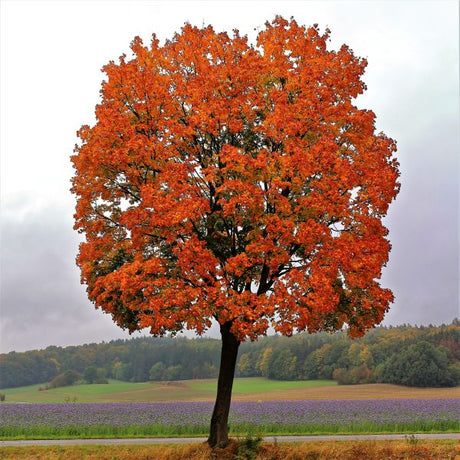
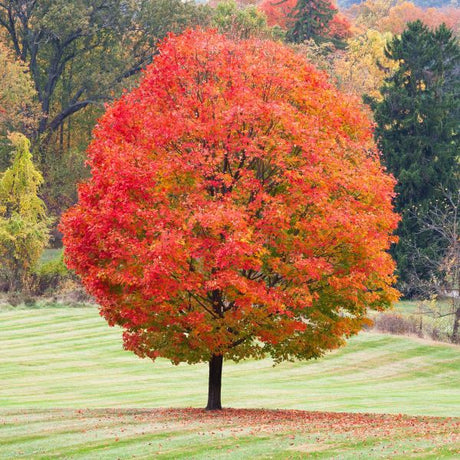
One of their most enduring features is the fall foliage, which turns such beautiful fall colors. Bronze, oranges, yellows, reds, and purples burst out in the fall, creating wonderful landscape views.

All this, lush shade plus delicious Maple syrup too!

Make Room For The Maple

Planting Maple trees may seem like a very straightforward process. It is similar to the act of planting most other trees. But there are a few very important things to first consider before purchasing and planting a Maple!

The Biggest Consideration - Roots!

Roots

Root System Facts

You'll get a great balance of strength and speed with the Maple tree! All varieties of Maple trees will be the show-stoppers of the fall season and continue shining green in summer and spring.

But what people fail to notice is that some Maple trees have extensive root systems! Some Maple trees, like the fast-growing Silver Maple, have aggressive root systems that can be close to the surface and should be planted away from sidewalks or foundations.

Spacing Formula

Spacing is key for a healthy plant. Find a tree's mature width and divide it by half. This is roughly how far from a sidewalk, driveway, your home's foundation, or underground system (Sprinkler/Septic/Cistern, etc.) the tree should be planted to avoid any future heartache.

Some Maples also tend to grow roots near the surface, with instances of them peaking above the soil. This makes potentially damaging the drip line of your tree easier. Spread mulch under the canopy to cover any roots close to the surface instead of trying to grow grass. Mowing over them may end up hurting your tree in the long run.

Fast-growing Maples get quite large and need room to spread both above and below ground to appreciate their glistening leaves in their full glory!

Timing and Location

While you can plant a Maple tree anytime the ground isn't frozen, many prefer to plant in the early spring or fall. The cooler air temperatures slow down the top growth of the plants, so cool air + warm soil = new roots.

Nature Hills has an extensive collection that grows in a wide range of areas, spanning from zones 3 through 10. Head over to each Maple’s Plant Highlights page to find its width and mature height so you’ll know which variety will work for you and your space.

Top Maples At Nature Hills:

  • Autumn Blaze® Maple: Fast-growing hybrid with brilliant scarlet-red fall foliage and a strong branching habit.

  • Norway Maple: Hardy shade tree with dense canopy, golden-yellow fall color, and urban pollution tolerance.

  • Japanese Red Maple: An elegant small tree with finely cut red leaves that hold color through summer.

  • Bloodgood Japanese Maple: Deep burgundy foliage, graceful shape, and exceptional year-round interest.

  • Coral Bark Maple: Four-season beauty with green summer leaves, golden fall color, and striking coral-red winter bark.

Once you find the right tree for your growing zone and location, it's time to make sure that the location is right for a tree:

  • Sunlight Requirements: Maples need full sun, and a few do well in partial sun. Choose a location with at least 6 hours of direct sunlight a day.
  • Soil Conditions: Choose an area with deep, enriched, and very well-drained soil.
  • Root Support: When ordering, don't forget to order the Nature Hills Root Booster for lifelong support at the roots.

Planting A Maple Tree In 6 Easy Steps

Infographic about Planting Maple Trees
  1. Prep the roots: Once you receive your tree, follow the included instructions to prep your root system for planting. Soak the roots to rehydrate them after their journey.
  2. Prepare the hole: Dig an area twice the width of your new tree’s root system, keeping the depth the same as it was when in its nursery container. (Read why planting too deep is bad here.)
  3. Water and nutrients: Fill the hole with water, let it soak, then sprinkle in the Root Booster.
  4. Position the tree: Remove the tree from its container or bag, and set it into the hole. Adjust the soil so the root depth is level with the surrounding soil.
  5. Backfill: Use native topsoil and tamp down to remove air pockets.
  6. Water and mulch: Water thoroughly, let it drain, then water again. Apply a 3-4 inch layer of mulch over the soil surface.
Extra planting tips:
  • Stake young Maple trees if needed to protect them from wind.
  • Use trunk protection in winter to guard against deer and rodents.
  • Apply deer repellent during the growing season to train deer to avoid your tree.

Maple Tree After Planting Care

Watering Guidelines: Use the Finger Test Method to decide when to water during the first year. If the soil is moist a few inches down, skip watering and check the next day. If dry, water deeply. In summer heat, you may need to water twice a day.

Seasonal Watering: Even after establishing, water during droughts and before winter to keep roots hydrated before dormancy.

Pruning Tips: Prune Maples after they leaf out to avoid dripping sap. Shape with strategic cuts for a balanced, open canopy and one main leader. Ensure good air circulation and sunlight penetration.

Happy Maple Trees From Day One!

As one of the most beloved trees in our online nursery, it's tough to go wrong with a stately Maple. From their breathtaking fall color to their cooling summer shade, Maples bring a timeless beauty to any landscape.

When given the right space, soil, and care from the very beginning, your Maple can thrive for decades, becoming a cherished part of your yard and a seasonal highlight year after year.

Whether you dream of tapping your own syrup or simply enjoying the glowing leaves each autumn, planting a Maple is a rewarding investment in both beauty and legacy.

Happy Planting!
Previous Next

Compare Plants

Browse the features and specs side-by-side to find the best fit for your garden.

A table comparing the facets of 5 products
Facet
Sugar Maple
Sugar Maple Tree
View details
Red Maple Tree
Red Maple Tree
View details
Silver Maple
Silver Maple Tree
View details
Norway Maple
Norway Maple Tree
View details
Autumn Blaze® Maple
Autumn Blaze® Maple Tree
View details
Rating
Rating
(1)
----
Type
TypeTreeTreeTreeTreeTree
By
ByNature Hills NurseryAmerican BeautiesNature Hills NurseryNature Hills NurseryNature Hills Nursery
Flower Color
Flower Color
  • Yellow
  • Red
  • Yellow
  • Yellow
  • Red
Growing Zone Range
Growing Zone Range
3-8
4-9
3-9
3-7
3-8
Mature Height
Mature Height
50-70 ft
40-60 ft
50-70 ft
40-50 ft
40-60 ft
Width
Width
30-45 ft
40-60 ft
40-60 ft
30-45 ft
40-60 ft
Price
Price
Regular price $9790
Regular price $9790
Regular price $8878
Regular price From $11990
Regular price $11900

Frequently Asked Questions

When to plant maple trees?

Plant maple trees in early spring after the last frost or in early fall, 6-8 weeks before the ground freezes. Spring planting (March-May) allows the tree to establish roots during the growing season, while fall planting (September-October) takes advantage of cooler temperatures and natural rainfall. In USDA zones 3-9, avoid planting during summer heat stress or winter dormancy periods. Choose your timing based on your local climate and ensure consistent watering for the first growing season.

How to plant a maple tree?

To plant a maple tree, dig a hole twice as wide as the root ball but no deeper than the container height, ensuring the root flare sits at ground level. Space trees according to their mature width (typically 20-40 feet apart depending on variety) and plant away from foundations since some maples like Silver Maple have aggressive surface root systems. Plant in early spring or fall when temperatures are moderate, water thoroughly after planting, and apply 2-3 inches of mulch around the base while keeping it away from the trunk.

When is the best time to plant a maple tree?

The best time to plant maple trees is during their dormant season in fall (6-8 weeks before hard frost) or early spring (before bud break). Fall planting allows roots to establish before winter stress, while spring planting gives the tree a full growing season to develop. In USDA zones 3-9, aim for October through November or March through early May, depending on your local climate. Choose your timing based on avoiding extreme temperatures and ensuring adequate moisture for root establishment.

What USDA hardiness zones are suitable for planting maple trees?

Maple trees thrive across USDA hardiness zones 3 through 9, with specific varieties adapted to different climate ranges. Sugar maples and red maples perform best in zones 3-8, while Japanese maples prefer the milder conditions of zones 5-9. Silver maples tolerate the widest range from zones 3-9 but may suffer winter damage in the coldest areas. Choose a maple variety that matches your specific zone and plant in fall or early spring when temperatures are consistently between 40-70°F.

Where to plant red maple?

Red Maples thrive in USDA zones 3-9 and prefer full sun to partial shade with moist, well-draining soil. Plant them at least 20-30 feet away from buildings, sidewalks, and power lines to accommodate their mature spread of 25-45 feet. Choose a location with adequate drainage, as Red Maples can tolerate wet conditions but perform best in consistently moist soil. Space multiple trees 30-40 feet apart for optimal growth and air circulation.

When should i plant a maple tree?

The best time to plant maple trees is during their dormant season in early spring (after the last frost) or fall (6-8 weeks before the ground freezes). Spring planting allows the tree to establish roots throughout the growing season, while fall planting takes advantage of cooler temperatures and consistent moisture. In USDA zones 3-9, aim for March through May or September through November depending on your location. Plant when soil is workable but not waterlogged to ensure proper root establishment before seasonal stress periods.

How far should maple tree be planted from house?

Maple trees should be planted at least 20-30 feet from your house foundation, with the exact distance depending on the variety's mature size and root system. Fast-growing species like Silver Maples have particularly aggressive surface roots and require even greater spacing of 40-50 feet from structures, sidewalks, and driveways. Smaller varieties like Japanese Maples can be planted closer at 10-15 feet from the house. Always research your specific maple variety's mature spread and plant at a distance equal to at least half the tree's expected canopy width.

How do you plant a maple tree following the six steps?

While the article mentions "Six Steps For Planting Maple Trees," the specific steps aren't detailed in the provided content. However, successful maple planting requires proper spacing considerations, especially for varieties like Silver Maple which have aggressive surface root systems that should be planted away from sidewalks and foundations. The key is following standard tree planting practices while accounting for each maple variety's mature size and root spread. Contact Nature Hills Nursery directly for the complete six-step planting guide specific to your chosen maple variety.

What is the best time of year to plant maple trees?

The best time to plant maple trees is during their dormant season in late fall through early spring, typically October through March in most zones. This timing allows the root system to establish before the stress of summer heat and gives the tree a full growing season to develop. Avoid planting during extreme cold spells or when the ground is frozen. Plant at least 6-8 weeks before your area's average last hard freeze for optimal root development.

How deep should the planting hole be for a maple tree, and where should the root flare sit?

The planting hole should be 2-3 times wider than the root ball but only as deep as the root ball itself. Position the root flare (where the trunk begins to widen at the base) at or slightly above ground level to prevent the tree from settling too deep after planting. Never bury the root flare below the soil line, as this can lead to root rot and tree decline. Backfill with native soil and water thoroughly to eliminate air pockets around the roots.

Find Your Garden's Growing Zone!

Your Current Growing Zone:

Zone

ZIP Code:

✓ Growing Zone Set Successfully!

Your zone has been saved and will be used throughout the site.

⚠ Unable to locate a growing zone for that ZIP code.

Please check your ZIP code and try again.

Looking up your growing zone...

When ordering a tree or plant, make sure to know your planting zone.

You can determine your garden's USDA hardiness zone by entering your Zip Code below.