Free Shipping on Orders $199+

Growing Zone: | Garden in
Find your Growing Zone!

More Of The Best Variegated Shrubs For Unique Gardens

shop the best variegated shrubs at nature hills

Charlotte Weidner |

Variegated Foliage: A Garden Glow-Up

buy variegated shrubs at nature hills

Variegated shrubs bring natural artistry to your landscape. These ornamental plants have beautifully patterned foliage - splashed, edged, or streaked in white, cream, gold, or silver! Each delivers color and contrast long after flowers fade. Variegated foliage shrubs and variegated trees are some of the best landscaping plants for year-round interest, whether you need a hedge, accent tree, or foundation planting!

In spring, new leaves emerge fresh and bright. By summer, their creamy margins or golden streaks provide cool relief in full-sun gardens. In autumn, many variegated trees and shrubs shift tones, layering another season of brilliance. From showy Dogwoods to elegant Euonymus, these plants thrive as focal points, borders, or companions in any style garden!

What Causes Variegation in Plants?

shop variegated shrubs at nature hills

Variegated foliage happens when parts of a leaf have less chlorophyll than others, creating creamy-white, yellow, or silver patterns against the green. Some newer varieties even have pink, red, purple, and varying shades of green, all on the same leaf!

Variegated foliage can appear naturally through genetic variation, or it can be encouraged by plant breeders to enhance ornamental plants with unique patterns. Sometimes, variegation comes from structural changes in the leaf that reflect light and create striking designs, while in other cases it results from stable mutations passed down from one plant generation to the next. These natural and cultivated patterns make variegated shrubs and variegated trees some of the most sought-after choices in garden design!

Because variegated leaves have less chlorophyll, they often grow more slowly than solid-green plants, but their ornamental value is unmatched! That’s why many variegated shrubs and trees become instant focal points in the garden!

Top 10 Variegated Shrubs

  1. Ivory Halo Dogwood (Cornus alba ‘Bailhalo’)

  • Green leaves with creamy-white margins
  • Clusters of white spring flowers attract butterflies
  • White berries feed birds in late summer
  • Stunning red stems in winter for four-season interest
  • Zones 3-7
  1. My Money Purple Effect® Weigela (Weigela florida 'Verweig8')

  • Creamy margins highlight deep green leaves
  • Purple funnel-shaped blooms in late spring attract hummingbirds and pollinators
  • Occasional repeat flowering through summer
  • Adds fragrance and vibrant color
  • Zones 4-8
  1. Silver King Euonymus (Euonymus japonicus)

  • Glossy green leaves edged in silver-white
  • Small spring flowers are lightly fragrant
  • Evergreen foliage provides year-round brightness
  • Ideal hedge or foundation shrub
  • Zones 6-9
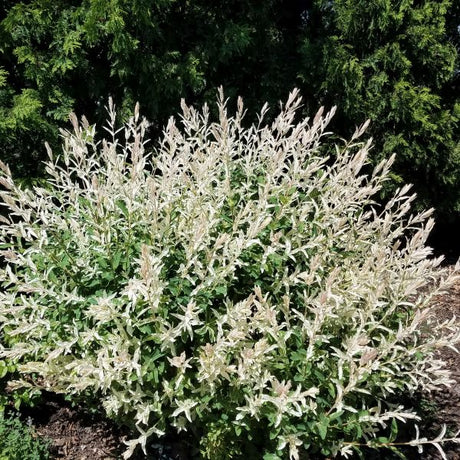
  1. Dappled Willow (Salix integra ‘Hakuro Nishiki’)

  • New leaves emerge pink, maturing to mottled white and green
  • Graceful arching branches give it a soft, airy shape
  • Small catkins in spring add subtle seasonal interest
  • Can be grown as a shrub or trained into a small tree form
  • Zones 4-9
  1. Cool Blue™ Variegated California Lilac (Ceanothus thyrsiflorus ‘Cool Blue’)

  • Evergreen shrub with blue-green leaves edged in creamy white
  • Profuse clusters of fragrant sky-blue flowers in spring attract bees, butterflies, and hummingbirds
  • Excellent drought-tolerant plants choice for coastal gardens and water-wise landscapes
  • Provides year-round foliage interest plus vibrant seasonal blooms
  • Zones 7-10
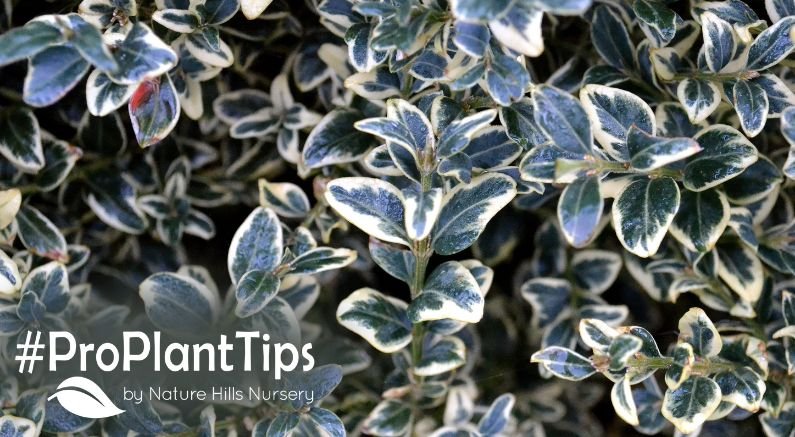
  1. Variegated Boxwood Cone Topiary (Buxus sempervirens ‘Variegata’)

  • Dense evergreen with creamy-white leaf edges
  • Inconspicuous spring flowers attract bees
  • Year-round greenery for hedges, edging, and topiary
  • Low-maintenance and classic, trimmed and trained cone form
  • Zones 5-9
  1. Olive Martini™ Elaeagnus (Elaeagnus x ebbingei ‘Viveleg’)

  • Glossy olive-green leaves edged in golden yellow for year-round brightness
  • Small, highly fragrant white flowers bloom in fall, drawing bees and pollinators
  • Produces small red fruits that attract birds in winter
  • Salt-tolerant and hardy, perfect for coastal landscapes or hedging
  • Zones 6-9
  1. Emerald Gaiety Wintercreeper Euonymus (Euonymus fortunei ‘Emerald Gaiety’)

  • Green leaves with crisp white edges
  • Tiny spring flowers are nectar sources for pollinators
  • Produces small berries (toxic to humans but relished by birds)
  • Evergreen groundcover or climbing shrub with year-round interest
  • Zones 5-9
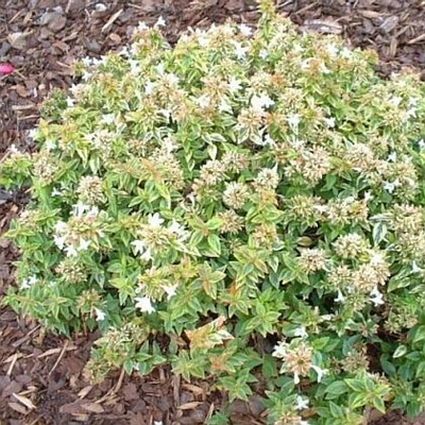
  1. Kaleidoscope Abelia Bush (Abelia x grandiflora ‘Kaleidoscope’)

  • Golden variegated foliage flushed with pink tones
  • Long-blooming, fragrant white flowers from summer to fall attract butterflies and bees
  • Semi-evergreen in warmer climates
  • Compact, colorful, and versatile shrub
  • Zones 6-9
  1. Honey Maid Holly (Ilex x meserveae 'Honey Maid')

  • Glossy, blue-green broadleaf evergreen leaves edged in cream
  • Tiny spring flowers support pollinators
  • Bright red berries in fall and winter feed birds and add holiday flair
  • Classic evergreen shrub with bold presence
  • Zones 6-9

Landscaping With Variegated Foliage

shop variegated plants at nature hills

Variegated plants are natural scene-stealers, so use them where they shine:

  • Focal points: Variegated Dogwoods or Japanese Maples anchor entryways and garden beds
  • Shade brighteners: Wintercreeper or Variegated Boxwood sparkle in darker corners
  • Companion plants: Pair variegated shrubs with evergreen bushes or bold-flowered perennials like Roses, Hydrangea bushes, and Ornamental Grasses for contrast
  • Hedges and borders: Euonymus and Abelia make colorful, neat, tidy shrubs
  • Four-season gardens: Dogwoods and Hollies extend interest with winter stems or berries

Care & Maintenance For Variegated Plants

The white and lighter parts of variegated leaves make them more likely to burn in harsh sun environments. Keep variegated shrubs and trees looking fresh with a few simple steps:

  • Avoid harsh sun: afternoon sun may scorch leaves, so choose a location with morning sun access and afternoon shade
  • Use balanced fertilizer: too much nitrogen reduces variegation, so stick with slow-release fertilizer
  • Prune green reversions: cut back solid green shoots to maintain patterns
  • Maintain soil moisture: apply arborist mulch to conserve water and protect roots
  • Reduce stress: plant in sheltered areas to prevent fading from wind, drought, or extreme heat

Designs Only mother nature Could Paint!

Variegated shrubs bring brightness, contrast, and artistry to the garden! Each leaf is a unique brushstroke from mother nature, creating gardens that glow through every season.

With a little extra care, these shrubs and trees with variegated leaves will always be your garden’s spotlight stealers!

Happy Planting!

Previous Next

Compare Plants

Browse the features and specs side-by-side to find the best fit for your garden.

A table comparing the facets of 5 products
Facet
Ivory Halo Dogwood
Ivory Halo® Dogwood
View details
My Monet Purple Effect® Weigela
View details
Dappled Willow
Dappled Willow
View details
Emerald Gaiety Euonymus
Emerald Gaiety Wintercreeper Euonymus
View details
Abelia Kaleidoscope
Kaleidoscope Abelia Bush
View details
Rating
Rating----
(7)
Type
TypeShrubShrubShrubShrubShrub
By
ByNature Hills NurseryProven WinnersNature Hills NurseryNature Hills NurseryNature Hills Nursery
Flower Color
Flower Color
  • White
  • Pink
  • Yellow
  • White
  • White
Growing Zone Range
Growing Zone Range
3-7
4-6
4 – 9
5-9
6-9
Mature Height
Mature Height
6 ft
1-3 ft
6 ft
3-5 ft
2-3 ft
Width
Width
6 ft
1-2 ft
6 ft
3-6 ft
3-4 ft
Price
Price
Regular price $8691
Regular price From $2614
Regular price From $4498
Regular price From $1815
Regular price $5395

Frequently Asked Questions

How to make a plant variegated?

You cannot make an existing plant variegated, as variegation results from genetic mutations or structural leaf changes that occur naturally or through selective breeding. Variegated patterns develop when parts of leaves have reduced chlorophyll or light-reflecting structures, creating the distinctive cream, white, or gold markings. Plant breeders work for years to develop stable variegated cultivars through careful selection and propagation of plants showing desirable patterns. Choose established variegated varieties from reputable nurseries to ensure stable, lasting foliage patterns in your landscape.

What are the best variegated shrubs for small gardens or tight spaces?

For small gardens, choose compact variegated shrubs like Euonymus 'Emerald Gaiety' (3-4 feet, zones 5-8), variegated Abelia 'Kaleidoscope' (2-3 feet, zones 6-9), or dwarf variegated Weigela 'My Monet' (12-18 inches, zones 4-8). These shrubs provide year-round foliage interest without overwhelming tight spaces, and their slower growth habit due to reduced chlorophyll means less frequent pruning. Plant them as foundation plantings or border accents where their cream and gold patterns can brighten shaded corners.

How do I landscape effectively with variegated shrubs to create unique garden designs?

Use variegated shrubs as focal points in mixed borders or foundation plantings where their cream, gold, and silver patterns provide year-round contrast against solid green companions. Plant them in locations with morning sun and afternoon shade to prevent leaf scorch while maintaining vibrant coloration. Space variegated specimens slightly closer than their mature width suggests, as they typically grow more slowly due to reduced chlorophyll. Position larger variegated shrubs as anchor plants, then fill surrounding areas with complementary evergreens or flowering perennials to create layered visual interest.

What are the cultural requirements and care needs for popular variegated shrubs?

Most variegated shrubs prefer partial shade to protect their delicate foliage from scorching, though sun tolerance varies by species. They typically require well-draining soil and consistent moisture during establishment, with deeper watering once weekly better than frequent shallow irrigation. Since variegated plants have less chlorophyll and grow more slowly, avoid over-fertilizing which can cause them to revert to solid green growth. Prune out any solid green branches immediately to maintain the variegated pattern and apply 2-3 inches of mulch around the base for consistent soil moisture.

Which types of variegation are most common in shrubs, and how do they affect growth?

The most common variegation patterns in shrubs include creamy-white or yellow margins, silver streaks, and golden splashes throughout the foliage. Since variegated leaves contain less chlorophyll than solid-green plants, these shrubs typically grow 20-30% slower and may require partial shade protection in zones 7-9 to prevent leaf scorch. Newer cultivars also feature pink, red, and purple variegation alongside traditional patterns. Choose variegated shrubs for accent plantings rather than fast-growing screens, and provide morning sun with afternoon shade for optimal leaf color retention.

What USDA hardiness zones are suitable for the top variegated shrubs like those in the article?

The top variegated shrubs featured in our collection thrive across USDA zones 3-9, with most popular varieties like variegated weigela, spirea, and dogwood performing best in zones 4-8. Cold-hardy options such as variegated red-twig dogwood can handle zone 3 winters, while heat-tolerant varieties like variegated abelia extend into zone 9. Some tender specimens like variegated hibiscus are limited to zones 7-10. Check each specific variety's zone rating before purchasing to ensure it matches your local climate conditions.

How do I prevent variegated shrubs from reverting to solid green growth?

To prevent variegated shrubs from reverting to solid green, immediately prune out any all-green shoots as soon as you spot them, cutting back to variegated growth. Green branches grow more vigorously than variegated ones because they contain more chlorophyll, so they'll quickly dominate if left unchecked. Maintain proper light conditions for your specific variety, as insufficient light often triggers reversion in variegated plants. Inspect your shrubs monthly during the growing season and make clean cuts with sharp pruners to remove any solid green growth promptly.

What nutrition plans work best for variegated shrubs compared to green varieties?

Variegated shrubs require slightly more nitrogen than their solid-green counterparts since their reduced chlorophyll content makes them less efficient at photosynthesis. Apply a balanced fertilizer (10-10-10 or 12-12-12) in early spring at half the recommended rate, then supplement with a second light feeding in mid-summer. Avoid high-nitrogen fertilizers late in the season as this can reduce variegation and promote excessive green growth. Monitor your plants closely and increase feeding frequency rather than concentration if growth appears sluggish.

How much extra light do variegated shrubs need to maintain their colorful foliage?

Variegated shrubs typically need 20-30% more light than their solid-green counterparts to maintain vibrant coloration, since their reduced chlorophyll content makes photosynthesis less efficient. Most variegated varieties perform best in bright, indirect light or morning sun with afternoon shade, particularly in zones 7-9 where intense summer heat can scorch delicate variegated leaves. Insufficient light causes variegated foliage to revert to solid green as the plant compensates by producing more chlorophyll. Position your variegated shrubs where they receive 4-6 hours of bright light daily, adjusting for your climate zone's intensity.

What is a good variegated shrub or small tree like Elaeagnus 'Gilt Edge' for zone 7-9?

For zones 7-9, consider Euonymus fortunei 'Emerald 'n' Gold' or Abelia × grandiflora 'Kaleidoscope', both offering similar golden-edged foliage to Elaeagnus 'Gilt Edge'. These shrubs reach 3-6 feet tall and provide year-round variegated interest with cream, gold, and green patterns. Both thrive in partial sun to partial shade and maintain their colorful foliage through multiple seasons. Plant them as foundation specimens or border accents where their bright variegation can serve as a focal point.

Find Your Garden's Growing Zone!

Your Current Growing Zone:

Zone

ZIP Code:

✓ Growing Zone Set Successfully!

Your zone has been saved and will be used throughout the site.

⚠ Unable to locate a growing zone for that ZIP code.

Please check your ZIP code and try again.

Looking up your growing zone...

When ordering a tree or plant, make sure to know your planting zone.

You can determine your garden's USDA hardiness zone by entering your Zip Code below.