Free Shipping on Orders $199+

Growing Zone: | Garden in
Find your Growing Zone!

How To Identify Evergreen Trees Part 2: The Hemlock Tree!

How To Identify Evergreen Trees Part 2: The Hemlock Tree! - Nature Hills Nursery

Nature Hills Nursery |

There are so many wonderful varieties of Evergreen trees around the United States! Sometimes, when you are out for a stroll, you may find yourself referring to all of them as just Pine Trees.

However, there are many different varieties of coniferous evergreen trees out there! With a bit of practice, you’ll be able to pick out the differences and tell them apart! Once you know the basics, you’ll be identifying these year-round green trees up close and from afar like a pro!

Today, in Part 2 of Nature Hills Nursery’s Evergreen Tree identification series, it’s all about the heavenly Hemlock Tree!

The Hemlock Tree Basics

Members of the Pine tree family, Hemlock trees are lovely and often pendulous, dark green beauties. The Northeastern US forests are filled with Hemlock Trees! With the genus Tsuga, these soft-needled conifers have very short foliage that lies in a flattened arrangement alongside each branch and branchlet.

Close-Up

Handling cold and even shade, the Hemlock Tree is a unique Conifer! Found growing natively throughout the Northeastern parts of the US and Canada, as well as Central and Eastern parts of Asia, where they have cooler summers and cool, moist temperate regions that receive high rainfall, with minimal water stress.

The graceful pyramidal shape features gently drooping branches. Some say the very tops of these trees generally nod to the north out of respect for the cool and moist northern regions where they prefer to grow. The bark was used by Native Americans medicinally and for tanning leather, and dying wool because of the high amount of tannins.

Hemlock Foliage & Growth

Close-Up Tree Needles
  • New growth is in small tassels of bright green
  • Growth Rate is slow to medium, 12-24 inches per year
  • Soft, short, flat sprays of dark green mature needles with rounded ends - not sharp!
  • Two white lines down the length of the underside of each needle
  • Usually have conical crowns
  • The bark is gray to brown, scaly, deeply furrowed/fissured, revealing cinnamon-red
  • One of the few Conifers that can handle shearing and be trained into hedges

Hemlock Tree Cones

Tree Cones

Male cones are small and yellow at the bases of needles along the branches. They almost look like little bubbly clusters and are very tiny. Female cones are marble-sized, purple when young, and brown when mature. They are sometimes called wood roses!

  • Cones held at the branch ends
  • Female cones are tiny - only 3/4ths of an inch long, round, and papery
  • Wind-pollinated

Hemlock Tree Facts

  • Very long-lived - up to 800 years for some species
  • Unlike the Poison Hemlocks, Tsuga species are not poisonous
  • One of the few Evergreens that handle full-to-part shade
  • The needles have been used for producing tea and perfume
  • Can get to be over 100 feet or more, but typically much smaller in the urban environment.

Named for the needles' scent when crushed was supposedly similar to the unrelated Poison Hemlock plant. Eastern and Western Hemlock are not poisonous or toxic at all.

Hemlock Trees at Nature Hills!

Canadian Hemlock

Handling shade and loving moist, deep, highly organic soils, the Hemlock is a unique evergreen tree!

Canadian Hemlock (Tsuga canadensis)

Also known as the Eastern Hemlock, the Canadian Hemlock is a hardy North American native that handles partial shade. The elegant silhouette is full of short, dark green needles that are delicately arranged along the stems, and are grayish on the underside. They can be pruned and maintained in a more formal look, or allowed to grow naturally. The furrowed bark on older trees is a reddish-cinnamon color and looks fantastic. These long-lived trees can live for hundreds of years!

Alpha Upright Canadian Hemlock

Don’t have room for a large Hemlock? Look into the Alpha Upright Canadian Hemlock that is 6 - 8 feet in height and only spreads 3 - 4 feet wide! These are just as soft and fluffy as their larger cousins, but great for backdrops, as hedges and privacy, or in large planters in sun to shade!

2 Types of Hemlock

Other Hemlocks Native To The US

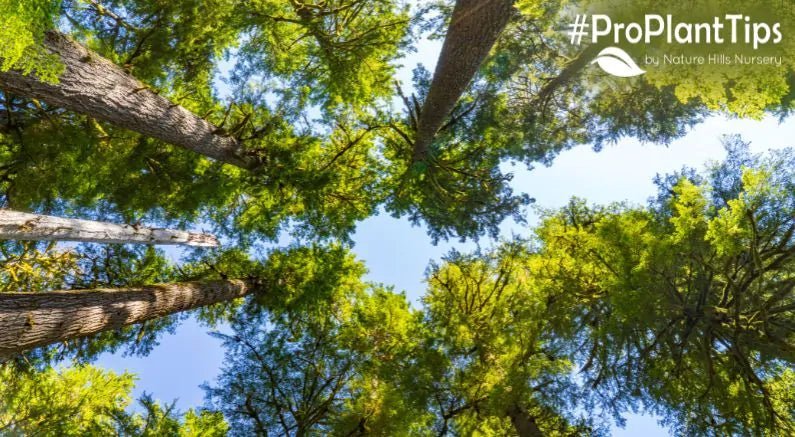
Looking up a Tree in a forest

Nature Hills Nursery is excitedly working to offer more variety for you every year! Check out some other great US Hemlocks that we hope will hit the website one day soon!

Western Hemlock (Tsuga heterophylla)

The Western Hemlock (Tsuga heterophylla) is a native that dominates much of the Pacific Northwest. At home in rocky soil, adding to its tough adaptability, this giant can grow to 150 feet or more and live for centuries.

Mountain Hemlock (Tsuga mertensiana)

Another native to the West Coast of North America is found between Southcentral Alaska and south-central California. Unlike flat-arranged Canadian Hemlock, Mountain Hemlock has whorled needles in gray-green to silvery white. The purple young cones stay small like others in the family but are a bit longer.

Carolina Hemlock (Tsuga caroliniana)

Growing along the Blue Ridge Mountains, Carolina Hemlock trees are considered endangered and love the moist, cool, shaded areas of your landscape instead of heat and sun. Having a shaggier appearance, the needles tend to be longer and have longer cones, too. The stout branches are horizontal and often pendulous.

False Hemlock (Pseudotsuga macrocarpa)

Also known as Bigcone Douglas Fir, Bigcone Douglas Spruce, and Desert Fir, the Pseudotsuga macrocarpa isn’t a real Hemlock but is native to the mountains of Southern California. More similar to Douglas Fir than Hemlocks, even the cones look more like the Douglas.

Heavenly Hemlocks at Nature Hills!

There are about 10 species of Hemlock found in North America and eastern Asia. Their fragrant and drooping, deep green foliage and wood rose cones are unique in the Evergreen family! Plus their ability to thrive in the shade!

Include this fantastic Conifer variety in your windbreak, shelterbelt, or privacy hedge, as well as a fantastic front yard specimen! Hemlock Trees always add elegance all year round!

Contact your local County Extension Office to see if a Hemlock tree will perform well in your area! Check back for Part 3: Fir Trees!

Happy Planting!

Shop Hemlocks

Previous Next

Frequently Asked Questions

What does a hemlock tree look like?

Hemlock trees display a graceful pyramidal shape with pendulous, drooping branches and soft, short flat needles arranged in flattened sprays along the branches. The dark green mature needles feature rounded (not sharp) ends and distinctive two white lines on the undersides, while new growth appears as small bright green tassels. These slow to medium-growing conifers add 12-24 inches annually and thrive in cooler, moist climates of USDA zones 3-7. Look for the characteristic drooping branch tips and soft needle texture to distinguish hemlocks from other evergreens in your landscape.

What USDA hardiness zones are best for planting hemlock trees?

Hemlock trees thrive in USDA hardiness zones 3 through 7, with some species like Eastern Hemlock performing best in zones 3-7 and Western Hemlock suited for zones 6-8. These evergreens prefer cooler climates with consistent moisture and struggle in hot, dry conditions found in southern zones. Canadian Hemlock can tolerate the coldest conditions down to zone 3, while Mountain Hemlock is limited to zones 4-6. Choose a species appropriate for your specific zone and plant in spring or early fall when temperatures are moderate and rainfall is adequate.

How to identify hemlock tree?

Hemlock trees are easily identified by their soft, short, flat needles with rounded ends that lie in flattened sprays along drooping branches. Look for the distinctive two white lines running down the underside of each needle and the graceful pyramidal shape with pendulous branches. These slow-growing conifers (12-24 inches per year) produce bright green tassels of new growth and thrive in cool, moist conditions with shade tolerance. Check the needle undersides for white striping and feel for the soft texture to confirm your identification.

Are hemlocks evergreens?

Yes, hemlocks are evergreen conifers in the Pine family (genus Tsuga) that maintain their dark green foliage year-round. These soft-needled trees feature short, flat needles arranged in flattened sprays along the branches, unlike the sharp needles of many other evergreens. Hemlocks thrive in cool, moist regions with partial shade and grow 12-24 inches per year in a graceful pyramidal shape. Plant them in zones where they receive adequate moisture and protection from harsh winter winds for best results.

When is the ideal time to plant hemlock trees?

The ideal time to plant hemlock trees is during fall or early spring when temperatures are cool and moisture levels are adequate. In zones 3-7, plant 6-8 weeks before the ground freezes in fall, or as soon as soil can be worked in spring after the last hard frost. Hemlocks establish best when daytime temperatures stay below 75°F and they have time to develop roots before facing summer heat stress. Choose a location with partial to full shade and consistently moist, well-draining acidic soil for optimal establishment.

Are hemlocks conifers?

Yes, hemlocks are conifers belonging to the genus Tsuga and are members of the Pine tree family. These soft-needled evergreens feature short, flat needles arranged in flattened sprays along branches, with distinctive white lines on the undersides. Hemlocks grow slowly to moderately at 12-24 inches per year and thrive in cool, moist conditions with partial shade tolerance. Look for their graceful pyramidal shape with drooping branches to distinguish them from other conifers in your landscape.

What is hemlock?

Hemlock trees (genus Tsuga) are graceful, pyramidal evergreen conifers in the Pine family, native to the Northeastern US and parts of Asia. They feature distinctive soft, flat needles with rounded ends that lie in flattened sprays along drooping branches, plus two white lines on the needle undersides. These slow to medium-growing trees (12-24 inches annually) thrive in cool, moist climates and tolerate shade better than most conifers. Look for their characteristic pendulous branching and gentle nodding tops when identifying hemlocks in your landscape.

Are hemlock trees evergreen?

Yes, hemlock trees are evergreen conifers that maintain their dark green foliage year-round. These members of the Pine family (genus Tsuga) feature soft, short, flat needles arranged in flattened sprays along the branches. Hemlocks thrive in cool, moist climates and handle both cold temperatures and shade better than many other evergreens. Look for their distinctive graceful, pyramidal shape with gently drooping branches to identify them in your landscape.

How far apart should hemlock trees be spaced when planting?

Space hemlock trees 6-8 feet apart for screening purposes, or 10-15 feet apart if growing them as specimen trees. Eastern hemlocks (zones 3-7) can reach 40-70 feet tall and 25-35 feet wide at maturity, while Canadian hemlocks stay smaller at 15-30 feet. Consider the mature size of your specific variety and local growing conditions when determining final spacing. Plant in spring or early fall for best establishment.

What type of soil do hemlock trees prefer for successful growth?

Hemlock trees thrive in moist, well-draining, acidic soil with a pH between 5.0 and 6.5. They prefer rich, organic soils that retain consistent moisture without becoming waterlogged, making them excellent choices for woodland gardens and naturalized areas in zones 3-7. These trees struggle in heavy clay or extremely sandy soils that either hold too much water or dry out quickly. Amend your planting site with compost or aged leaf mold to improve soil structure and maintain the slightly acidic conditions hemlocks need for optimal growth.

Find Your Garden's Growing Zone!

Your Current Growing Zone:

Zone

ZIP Code:

✓ Growing Zone Set Successfully!

Your zone has been saved and will be used throughout the site.

⚠ Unable to locate a growing zone for that ZIP code.

Please check your ZIP code and try again.

Looking up your growing zone...

When ordering a tree or plant, make sure to know your planting zone.

You can determine your garden's USDA hardiness zone by entering your Zip Code below.