
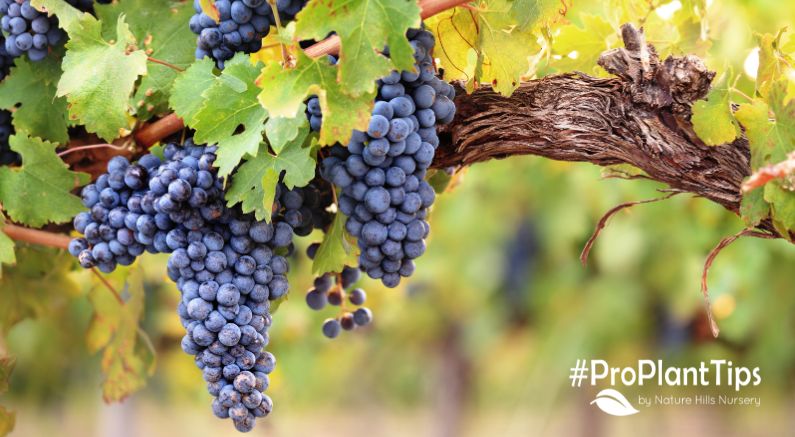
“The sun, with all those planets revolving around it and dependent on it, can still ripen a bunch of grapes as if it has nothing else in the universe to do.” - Galileo
Entwined in life, ritual, religion, and art, and an integral part of day-to-day life, the Grape plant is a versatile healthy fruiting vine with edible leaves, and lovely canes used for making natural crafts like wreaths and basketry!
Beneficial to not only ourselves, but also birds, wildlife, and pollinators! Grapes are high in antioxidants, have anti-cancer benefits, are heart-healthy, and contain resveratrol which is known to be anti-inflammatory. Plus they are so easy to incorporate into your diet!
Space-saving and elegant, it’s easy to include one of these vertical growing edible ornamentals into your landscape! Grape Vines are incredibly easy to grow - it just takes a few simple steps to keep them fruiting best!
Great Grapes!
The delicious fruit of the Grape Vine (Vitis) is beloved by young and old! This sweet, healthy fruit is as versatile in the kitchen as the vines are in the landscape! Not to mention the economic importance of this vining deciduous woody perennial!

Fossilized Grape leaves have been found dating 66 million years of age. Grape cultivation, or viticulture, has been practiced as far back as 6500 B.C. - That’s as long as civilization itself!
Of the 79 species of Vitaceae found predominantly in the Northern Hemisphere, there seems to be no end to the uses of this incredible vine! Today, thanks to the wine industry and plant innovators creating new varieties to thrive in all climates in the US, there are around 10,000 different Grape varieties! All parts have a use, they are cold-hardy and heat-tolerant, can handle a wide range of conditions, and are so easy to grow!
Growing from canes, these fast-growing plants climb and grow by way of tendrils and trailing growth, often climbing up tall trees without damaging them in the wild. In our gardens, they simply need a good sturdy support system to train them on.
There are six native Grape vines here in the US -
- Muscadine (V. rotundifolia)
- Summer Grapes (V. aestivalis)
- Frost Grape (V. riparia)
- Fox Grape (V. labrusca)
- Mustang Grape (V. mustangensis)
- Sand Grape (V. rupestris)
There are also European Grapes (V. vinifera) that are mostly used for making wine, and a slew of French hybrids. The American varieties are often very cold-hardy, while European varieties of these fruiting vines tend to prefer long, dry, hot summers and cool winters to develop best.

These juicy clusters of fruit are perfect as snacks and fresh eating healthy treats, flavorful jams and jellies, juiced for drinking or as sweetener, as flavoring, dried as raisins, or crushed and fermented to be made into wine and champagne!
The woody canes have delightful shaggy bark and produce green new growth with tendrils that wrap around anything they can get ahold of (without damaging it). Filling out in lush green (and edible), alternate deciduous foliage all growing season, each ornate leaf has unevenly toothy and palmately lobed, margins.
The sprays of greenish-white, fragrant flowers develop in the spring and are a boon to pollinators which help spread the pollen. But Grapes are also wind-pollinated for urban areas that are a bit short on bees. Soon the fat clusters of round to oval fruits begin to form.
Botanically known as berries, the colors range from green (White Grapes), red Grapes, and purple/blue (Black Grapes), and there are three main types of Grapes -
- Table Grapes (Slipskin) - Concord, Himrod, Canadice, Seedless varieties
- Juicing Grapes - Niagara, Concord, Catawba, Niagara
- Wine Grapes - Champagne, Riesling, Pinot Noir, Merlot, Edelweiss
Most are great for drying as raisins, and all make very delicious preserves!
Sometimes the fruit can have a white powdery coating, known as a ‘bloom’. Many have found that this bloom contains natural yeast, naturally present in the environment in this coating, and have used it for making their own bread and sourdough and assisting the process of fermentation.
Grapevine Perks
- Adaptable cold-hardy deciduous woody perennial vines
- Most are self-fruitful and all are pollinator-friendly
- Provide aesthetics, privacy, and shade in the landscape
- Fast-growing climbing, and space-saving
- Double-duty edible landscaping plants
Harvesting Grapes
Because the fruit of Grapevines does not continue to ripen once harvested, you need to ensure that they are fully ripe first!

If it is time for your fruit to ripen, but they are not, remove a few leaves or pinch back some stems to allow more sunlight onto your fruit. Grapes need sun and heat to fully ripen their best.
Your Grapes are ripe when they are at peak color, plump, juicy, and have full flavor. In other words, go ahead and pluck one off and try it! If they are beginning to shrivel or fall off the stems, then you have waited too long.
Store your picked Grapes for several weeks in a cool, dark location, sealed off from other food or items that have strong odors because Grapes tend to absorb them.
Grape Vine Care & Location
First, it is important to find which kind of Grape you wish to grow and why/what you want to use it for (fresh eating, juicing, preserves, wine, or all of the above!). Then research if it is suitable for your hardiness zone.
Choose a full sun location and plant Grapevines in the spring as soon as the ground is workable, or in the fall about 6-8 weeks before the first expected hard freeze.
Grapes need very well-drained enriched soil with a 5.5 - 7.5 pH range and regular yet moderate moisture. Add a 3-4 inch thick layer of mulch to keep the roots cool, and moist, and enrich the soil.
You can prune and train your Grapevines in early spring, before new growth begins to emerge, cutting back your plant and removing dead/broken branches. The new shoots form into fruiting canes with fruit spurs that fruit forms on - typically on first-year new growth stems. Pruning back your vines to just three buds each spring will encourage more new growth and therefore more fruit.
- Full Sun
- Moist, Enriched Well-Drained Soil
- Appreciates Mulched Beds
- Can Grow in Neutral to Alkaline pH
- Needs Sturdy Support To Climb On
- Prune Early Spring

As your canes grow, attach them to your trellis or support of choice to encourage the growth in the direction you desire. Because they wind themselves around any foothold, you won’t need much in the way of encouragement! Be sure your arbor or support is a sturdy one that won’t be pulled down by the Grapevine's weight, or by wind and storms.
Be sure your support allows your canes to have ample air circulation. It’s also important to keep your supports and vines at an easy-to-harvest height, and one that you can readily cover with netting should wildlife and bird pressure be too great.
Grapes are fantastic double-duty vines that provide shade and ornamental beauty in edible landscaping instances! Train the vines in a way to also provides privacy and screening, or even as barriers and property division.
Use multiple vines to add a Mediterranean style to your home and landscape and repeat the theme throughout your yard. Doing this also increases pollination chances! Planting extra vines also allows you to accommodate your feathered friends, but you may want to invest in a mesh/netting cover to keep some of your developing harvests for yourself.
Get Growing Grapes!
Hardy throughout USDA growing zones 3 to 10, these are easy to grow, prolifically bearing vines that laugh in the face of cold, heat, sun, and humidity!
With a wide range of sizes available, large and small properties can both enjoy growing their own Grape Vine! Check out the perfect Grape for your garden today from Nature Hills!
Happy Planting!

