
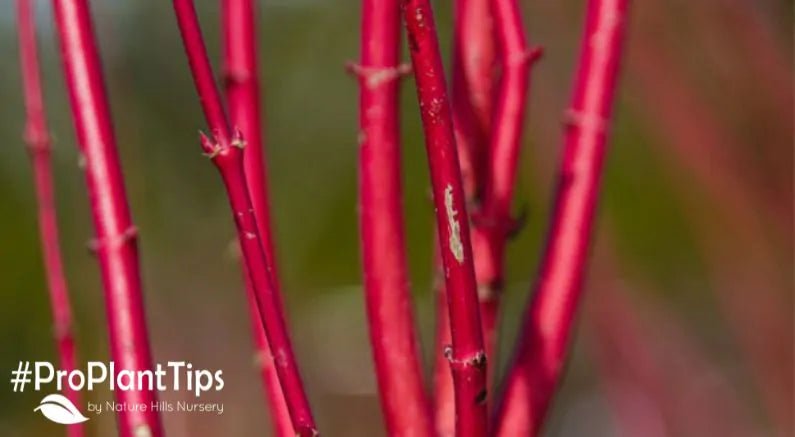
Dogwood Shrubs (Cornus spp.) are well-known for their colors, which are vibrant during all four seasons of the year!
Dogwood plants are used as specimens, privacy screens, in borders, or as smaller hedges. You can even train these plants into small multi-trunked tree forms! They look great planted as stand-alone focal points but are more dramatic when you plant several plants in a group. Either way, the Dogwood is a beautiful addition to any garden!
The stems not only light up the landscape in the winter but also the vase arrangement and outdoor seasonal planters for unique porch and patio décor!
Learn more about these great colorful accent shrubs available at NatureHills.com!
Table of Contents
- Types of Dogwood Shrubs
- Planting New Dogwood Shrubs
- Additional Tips for Dogwood Shrubs
- Dogwood Shrub Upkeep & Care
- Nature Hills Favorite Dogwood Shrub Top 5!
- Four-Season Beauty!
Types of Dogwood Shrubs
Nature Hills offers Dogwood bushes in a wide variety of foliage colors, fall colors, stem shades, and a great many sizes and forms to choose from! Dogwood bushes are popular choices for snowy climates, where their brilliant stems and berries add color and life to otherwise drab winter landscapes.
There are two main types of Dogwood shrubs:
- Native thicket-forming, suckering, and spreading type that thrives in higher moisture in wetlands throughout the US
- The flowering Dogwood shrubs (Cornus florida) are typically grown as large, lower-branched shrubs or can be trained into small trees. Larger Kousa Dogwood (Cornus kousa) are typically more tree-like but can be grown as large shrubs too!

Not only do Dogwoods provide a wide range of foliage colors, but they also adorn themselves with a flush of white flowers each spring and many provide berries for songbirds to fatten up for the winter!
The shrubs that form thickets and colonies thrive in higher moisture locations and their dense branching becomes bird heaven for nesting all spring and summer, and shelter throughout the colder months of the year. Plus, Giant Silk Moths and several species of butterflies favor Dogwood species as Host Plants.
Planting New Dogwood Shrubs
Properly located Dogwood Shrubs can live for a long time. Ensuring you follow these key steps during planting makes all the difference to young Shrubs while guaranteeing reliable floral displays every spring and the most colorful stems in the winter!
Dogwood shrubs are super hardy and tolerant of a wide range of conditions. Variegated forms will appreciate more sun to help keep the colorful foliage and the plants uniform. Easy to grow and require a once-a-year pruning once mature. Dogwood shrubs brighten the gloom without any fuss or muss.
These are hardy shrubs, and adaptable to multiple soil types. Provide consistent moisture for best health, and a well-drained soil location, then enjoy these beauties as Dogwood shrubs adapt to drier locations or moist sites with ease!
- Once you’ve received your new Dogwood Shrub, unpack it right away
- Rehydrate the roots after their trip by submerging the whole pot in a bucket of water until bubbles stop coming to the surface, then take out of the water and let the excess drain away.

- While your shrub is soaking, dig your planting hole twice as wide as the roots, but no deeper.
- We highly encourage using Nature Hills Root Booster for lifelong symbiotic root support
- Remember not to plant too deep. Keep them at the same level at which they were growing at the nursery.
- Tap your Dogwood Shrub out of its nursery container, and settle it in the planting hole
- Massage the root ball loosening the roots and disrupting any circling roots
- Arrange and settle the roots into the hole.
- Firmly backfill soil around your shrub to eliminate air pockets at the root zone
- Then saturate the ground completely at the roots of your new shrub
- They do appreciate a 3-4 inch thick layer of mulch over their root systems
Additional Tips for Dogwood Shrubs
- Keep the roots moist until they plants are established without overwatering
- Berm your planting site if poor drainage is suspected
- Maintain consistent soil moisture for the Shrub's first year in its new location.
- Use a slow release in early spring to give them a nice start
Dogwood Shrub Upkeep & Care
Dogwood shrubs are generally deer-resistant and unless they are desperate, deer usually pass them by. If you live in an area with a heavy deer population, from day one spray your shrub with deer repellent and reapply according to product directions to train deer that your shrubs don’t taste good and steer them away from your landscape!
Once established Dogwood bushes are drought-tolerant and adaptable to both cold and hot weather extremes.
Dogwood bushes are best maintained by renewal pruning - removing the oldest stems down the ground leaving the younger thinner stems in place as they have the best stem color. This renewal pruning should be done about every second year or whenever you notice stems lacking color. These plants naturally colonize, but you can cut out spreading suckers if desired to keep the plants more individual specimens.
Nature Hills Top 5 Favorite Dogwood Shrubs
Now that you know how to care for them - here are which Dogwood Shrubs are Nature Hills favorites and those that show off the best of the best that the Cornus family has to offer your landscape!
#5 Arctic Fire Dogwood

The Proven Winners® selection with bright red stems in the winter is our number 5 pick! The dwarf Arctic Fire® Red Redosier Dogwood (Cornus sericea 'Farrow') has fluffy white flowers and clusters of white berries that birds love. While the dazzling green leaves are great for summer texture, the real show starts in the fall as the bush loses its leaves and exposes the stunning red stems! A mid-sized deciduous shrub, these are showy
- White Flowers & White Berries
- Great For Birds & Butterflies
- Lush Green Foliage
- Brilliant Red Stems Each Winter
- Growing Zones 3-7
- An Excellent Compact Selection 3 - 5 Feet Tall and Wide
#4 First Editions® Neon Burst™ Dogwood

This multi-fall-colored Neon Burst™ Dogwood (Cornus alba 'ByBoughen') is part of the First Editions® Trees and Plants line. The electric yellow leaves and small white flower clusters, give your spring and summer a colorful start followed by a show that will start once the autumn chill sets in. Neon Burst™ explodes into orange-yellow, red, and even purple tones over the already bright chartreuse foliage! Then the red stems show off once the cold weather arrives! Plus, you get the Dogwood shrub white flowers and berries!
- Brilliant Electric Yellow Foliage All Growing Season Long
- White Blossoms & White Summer Berries Tinged Blue-Green
- Purple, Red, Orange & Yellow Fall Color
- Red Showy Stems All Winter
- 4 - 6 Feet Tall and Wide
- Growing Zones 2-7
#3 Yellow Twig Dogwood

Most Dogwood shrubs have red stems, but the Yellow Twig Dogwood (Cornus sericea 'Flaviramea') sheds its green summer flush of leaves to expose bright yellow stems in the winter! This nice 6-8 foot tall and wide shrub shows off white flower clusters in the spring that beneficial pollinators adore these easy sources of nectar and white berries for birds later in the summer and into fall. Yellow Twig Dogwood has a nice form that is lush and densely branched, full of dark green leaves all summer. The bright yellow branches also highlight the mahogany red fall color!
- Lush Green Leaves
- White Flowers & White Berries
- Mahogany Red Fall Color
- Brilliant Yellow Stems In Winter
- Growing Zones 3-8
- 6 - 8 Feet Tall and Wide
#2 Bailey Red Twigged Dogwood

Our number two slot is the famed Bailey Red Twigged Dogwood (Cornus sericea 'Baileyi') with its glowing red branches and pretty green leaves. These four-season shrubs start with white flowers in the spring, lush pointed leaves all summer, blue late-summer berries that turn white with a slight blue tinge in the fall and winter, and then those gorgeous red stems with wine-hued fall color! Unlike native Redosier, Bailey Red Twig Dogwood doesn’t sucker or create thickets. Plant somewhere you can enjoy the red stems after a fresh snowfall.
- White Blossoms & White Berries Tinged Blue In Summer/Fall
- Lush Green Leaves Tinged Reddish
- Fast Growing
- Cabernet Fall Color & Brilliant Red Stems
- Growing Zones 3-8
- 6 - 10 Feet Tall & Wide
#1 Ivory Halo® Dogwood

In the number one spot is the pretty green and white variegated Ivory Halo® Dogwood (Cornus alba 'Bailhalo')! Also known as a Variegated Tatarian Dogwood, the show-stopping bi-colored foliage and white flowers look cool and refreshing all spring and summer! Fall tinges those two-tone leaves in red and purple before dropping and revealing the showy intensely-red stems! No matter where you plant this pretty shrub, it will knock your socks off all year long! Very showy spring, summer, fall, and winter - Ivory Halo® is a fantastic ornamental shrub!
- Gorgeous Green & Cream Variegated Foliage
- Flat-Topped White Flowers & White Berries
- Showy Reddish-Purple Fall Foliage
- Brilliant Red Stems All Winter
- Growing Zones 3-7
- 5 - 6 Feet Tall and Wide
From the largest Pagoda Dogwood and Gray Twig Dogwood to the smallest Arctic Fire®, any of these showy shrubs will light up your landscape all year round!
Four-Season Beauty!
You, your home's curb appeal, and the green-with-envy neighbors will sing praises to these incredible colorful shrubs! Not to mention all the local songbirds and butterflies that will be glad you picked up a few Dogwood bushes from NatureHills.com today!
Spring flowers, fantastic foliage, fall color, berries, blooms, and fall color - Oh My!
Hurry and secure these versatile, adaptable native selections today from Nature Hills Nursery!
Happy Planting!

