
- A Simple Look at Fruit Plant Pollination
- If You Want Fruit, Support Pollinators with Flowering Plants
- The Best Pollinating Partners Bloom At The Same Time!
- Self-Pollinating Fruit Trees
- Hand-Pollination by Human Gardeners
- Self-Fruitful Fruit Trees Love Pollination Partners, Too
- Selection and Planting Tips for Fruit Trees
- Additional Fruit Tree Growing Resources from NatureHIlls.com
If you are craving homegrown fruit, there is no time like right now to get started! Turn even a small lot into a productive homestead with help from NatureHills.com.
Let's take a closer look at pollination—one of the most important success factors involved in harvesting a crop of fruit. Simply put, fruiting takes place when pollen from the male parts of a flower covers the female parts to fertilize it.
Some fruiting trees can pollinate themselves (self-fertile). Others need a second variety from the same species nearby and a pollinator to move the pollen from one tree to the second.
Some Fruiting Trees That Need Pollination Partners:
- Pears
- Apples
- Plums
- Sweet Cherries

A Simple Look at Fruit Plant Pollination
Many fruit trees require a "pollinator''. But what does that mean exactly?
Pollen is produced by the male parts of the flower called the anthers, which are held on long filaments. Together, the anthers and filaments are called stamens.

Pollen-producing stamen, © 2005 Karwath
When pollen grains from the anther are introduced on the female stigma of a flower, pollination and fertilization occurs. A mature fruit is then created from the female flower parts.
In some cases, just having a source of pollen is not enough. Sometimes you need a pollinator or an agent that moves the pollen from one flower to another.
Pollination happens in many different ways. Wind, ants, beetles, honey bees, birds are all utilized by plants to fertilize flowers in order to bear fruit.
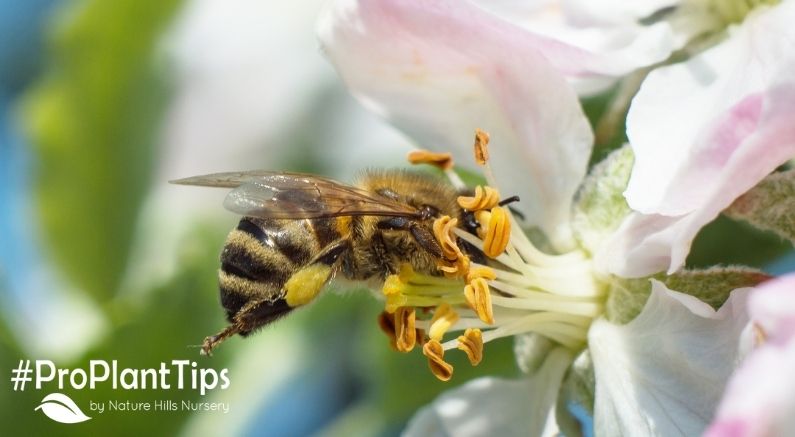
If you've ever studied the way honey bees work over a flower to gather nectar, you might have seen that sticky yellow pollen clinging to their legs. As a pollinator flies from one fruit tree to another, they will naturally introduce the pollen to the stigma.
Watch your fruit trees as the petals of the bloom fall away. Look closely for a round swelling at the base, which tells you that a crop is on the way!
If You Want Fruit, Support Pollinators With Flowering Plants
Poor pollination can result in smaller harvests. Plant flowering shrubs and perennials to support honey bees and other pollinators to encourage them to visit your Apple orchard during the spring bloom period.
Consider installing bee hotels or pollinator hotels and leaving water stations out. This will bring more pollinators to your property!

© 2007 Guerin Nicolas
Many fruit trees like Apples, Pears, and Paw Paw require pollen from a related tree nearby. To produce fruit, they need a set of chromosomes from a genetically different pollinating partner tree.
In order for pollination to take place, the flowers have to be compatible. This means that they have to be the same species.
If you want to pollinate an Apple tree, you'll need Apple pollen. Furthermore, you will want your pollen-producing flowers to bloom at the same time as your fruit-producing flowers.
Plant two fruit tree varieties with overlapping bloom times. Bees and pollinators visiting the flowers of one tree will deposit the pollen in the flowers of the other.
The Best Pollinating Partners Bloom At The Same Time!
European Pears and Asian Pears have only a small window of overlapping bloom periods. However, extended-blooming Ornamental Pear trees can successfully act as pollinizer trees for both Asian Pears and European Pears.
Extended blooming Dolgo Crabapple makes an excellent pollinizer for many other fruiting Apple trees. Sweet Cherry trees also need a pollinizer, and Black Republic Sweet Cherry is a wonderful choice.
Work with existing fruit trees in your neighborhood to increase the chances of cross-pollination. If your neighbor has an early-blooming Sweet Cherry tree, select another one with a compatible bloom time...so that everyone benefits!
Some species will not pollinate each other, such as European Plum (Prunus domestica) and Japanese Plums (Prunus salicina). These different species will not typically cross each other, and make poor pollination partners.
Sweet Cherries and Sour Cherries also show differences beyond taste! Sweet Cherry trees need to be pollinated to produce luscious harvests, but Sour Pie Cherries are self-fruitful.
Choose two or more different fruit trees from within the same family and whose bloom times overlap. If the flowers bloom at different times, the pollen from one might not be around when the other is ready to receive it.

Self-Pollinating Fruit Trees
The natural shape of the flowers determines whether a fruit tree is self-fruitful. Some, like Citrus trees have "perfect flowers" with both female parts and pollen-producing male parts.
Although there are exceptions to the rule, the following list of fruit trees will produce fruit with a single tree. However, please note that you'll get a larger crop with another tree nearby.
- Citrus
- Peaches
- Apricots
- Pluots/Apriums
- Nectarines
- Sour Cherries
Hand-Pollination By Human Gardeners
People growing Citrus trees indoors in cold winter zones indoors can use a paintbrush during bloom! People become pollinators as they swirl the brush on the anthers and move it to the stigma!

Paw Paw trees are another variety of fruiting trees that you can hand pollinate. However, this type of tree is "self-incompatible", so you'll need two different types of Paw Paw trees from NatureHills.com to get fruit.
You'll also want to consider doing hand-pollination with a brush if it's been a wet and cold spring. If you don't see many pollinators showing up, or if you live in an urban area with a pavement desert...hand-pollination can save your harvest.
Self-Fruitful Fruit Trees Love Pollination Partners, Too
Anna Apples and Golden Delicious Apples are both special cultivars that are self-fruitful. They will both produce fruit with a single tree.
But you will get much larger harvests with a partner! Try white-flowering Crabapples, Red Delicious Apple or Red Jonathan Apple with Golden Delicious for bigger yields.
Sour Cherries are typically self-fruitful, they will set fruit with a single plant. But there are advantages to planting more than one, such as gaining a longer season of fresh harvest.
Peach and Nectarine trees are self-fruitful, so you will have fruit with just one tree. But if you love fresh peaches, consider planting a successive harvest with early-season, mid-season, and late-season cultivars.
Selection and Planting Tips for Fruit Trees
Before you choose a new fruit tree, please check your Growing Zone. Type in your Zip Code in the Zone Finder on every product page.
Some fruit trees require "chill hours"; which are periods of cool temperatures. Peaches, Apples, and some Plums need a cool dormant rest period to grow and produce fruit.
In addition, killing late spring frosts that harm flower buds are another consideration. Select a later-blooming Apricot and Peach tree if you have frost concerns.
In these types of cold weather areas, it's best to plant on a north-facing slope. This position allows cold air to slow the spring flower bud development.
Plant in an area that gets great air circulation. Don't forget to give your new fruit tree full sun and well-drained soil!
Amend the soil with Nature Hills Root Booster during planting and saturate the area with water to eliminate air pockets after planting. Apply supplemental water on a schedule during fruit development.
If you have existing fruit trees on your property, you can top-dress with an application of Nature Hills Root Booster, too! Give them life-long support with symbiotic ingredients that never stop working.
Enjoy the process of growing your own fruit. You'll join a nationwide Backyard Orchard movement and Edible Landscaping kick that are growing bigger every year!
Additional Fruit Tree Growing Resources from NatureHIlls.com
We list great pollination partners on the product pages to make it easy for you! For more resources on pollination and compatibility, check with an arborist or your local county extension agency.
If you have a local university with a horticulture department or County Extension Office, these are other good resources. When researching online, keep in mind that .edu websites are reliable sources for up-to-date, accurate information.
NatureHills.com Garden Blog Articles
- Plants to Support Pollinators
- High Density Planting Techniques for Smaller Yards
- Plant Successive Ripening Cultivars for a Longer Season of Fresh Fruit
