Free Shipping on Orders $199+

Growing Zone: | Garden in
Find your Growing Zone!

The Complete Guide To Yew Shrubs!

Everything You Need to Know About Yew Shrubs - Nature Hills Nursery

Charlotte Weidner |

Evergreen Yew Landscaping: Privacy, Hedges & Foundations

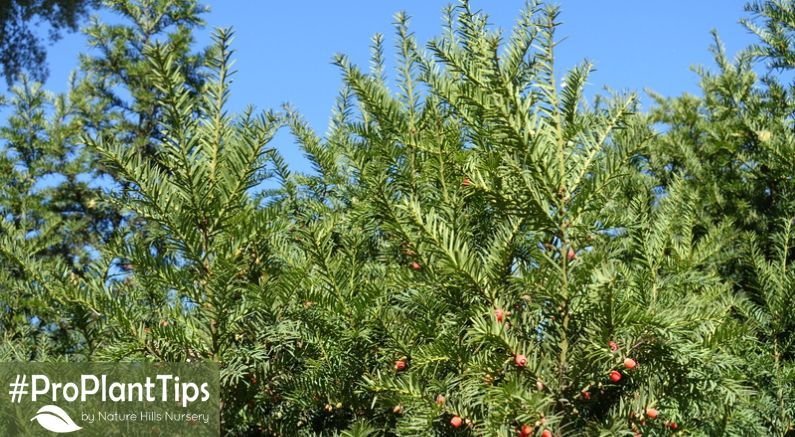
Yew Foliage

Fantastic landscape standards, Yew shrubs (Taxus family) are premium evergreen conifers perfect for landscaping, offering year-round greenery, easy maintenance, and exceptional versatility. These drought-tolerant shrubs excel as privacy screens, formal hedges, foundation plants, and topiary specimens while thriving in both full sun and full shade conditions.

Taxus family conifers were described in 1753 by Carolus Linnæus, and the name may have been derived from the Greek word 'toxon', meaning bow or arrow. These plants have flat 'leaves' that spiral around the flexible young stems, and reddish bark. Yews produce berry-like fruit from a scale-like cone on female plants.

Check out this complete guide to Yew bushes to add curb appeal to your landscape here!

Yew in landscape

All About The Yew Shrub

Yews offer unmatched versatility among evergreens: thriving in full sun to full shade, requiring minimal maintenance once established, and adapting to various soil types with proper drainage. With over 400 cultivars available, these disease-resistant shrubs provide year-round structure, exceptional pruning response, and offer year-round solutions for every landscape need from groundcover to tall privacy screens!

The two main types used for landscaping are the English (European) Yew and the Japanese Yew.

Popular Yew Varieties For Different Landscaping Needs

Densiformis Yew

Plants in the Taxus family are steeped in holiday traditions and strongly associated with churchyards and church graveyards as a symbol of sadness, and as holiday décor!

Best Yews for Privacy Hedges & Screens

  • Hicks Yew: Upright columnar growth, perfect for formal hedges and privacy screens, easily maintained at desired height
  • Fairview Yew: Natural vase-shaped habit, excellent for informal hedge borders and foundation plantings
  • Captain Upright Pyramidal Yew: Naturally pyramidal evergreen ideal for windbreaks and vertical accent plantings

Foundation Planting & Groundcover Yews

Yew Berries
  • Densiformis Yew: Compact, dense growth perfect for foundation borders without blocking windows
  • Spreading English Yew: Excellent ground cover for large areas, effective erosion control on slopes
  • Taunton Spreading Yew: Low-growing, spreading habit ideal for small spaces and foundation plantings
  • Wardi Yew: Versatile for slopes, mass plantings, and low-maintenance ground cover applications

Specialty & Warm Climate Alternatives

  • Yewtopia Plum Yew: Heat-tolerant alternative for zones 6-9, thrives in humidity
  • Japanese Plum Yew: Mid-sized evergreen perfect for hedging in warmer climates (zones 6-9)
  • Shrubby Yew Podocarpus: Tall, narrow privacy shrub for zones 7-11

Complete Yew Planting & Care Guide

Site Requirements: Excellent drainage is essential - Yews tolerate clay, loam, or sandy soils but fail in waterlogged conditions. In poor drainage areas, create raised beds with 18+ inches of amended topsoil. Plant in full sun to full shade (in hot climates) with a slightly alkaline pH preferred.

Planting & Establishment: Plant spring or fall, maintain consistent moisture the first year, then water only during drought. Apply a 3-4 inch organic mulch layer around the root zone, keeping material away from the trunk.

Professional Maintenance:

  • Pruning: Prune in early spring before new growth; annual shearing for formal hedges; severe renewal pruning rejuvenates overgrown shrubs
  • Fertilization: Balanced evergreen fertilizer annually when spring growth appears
  • Winter Protection: Shield from drying winds in harsh climates to prevent winter burn. Water well in the autumn, especially for Yews exposed to drying northern winds. Read more about winter watering here.

Landscape Applications & Design Uses

Yew Shrub Planted

Formal Elements: Perfect for topiary art, hedge borders, and architectural accents, with columnar varieties providing strong vertical structure

Natural Landscaping: Spreading varieties excel for erosion control on slopes, while dense growth creates bird-friendly and wildlife habitat - red berries attract songbirds, including Thrushes, Waxwings, and Finches

Seasonal Interest: Prized for crafts and holiday décor, including winter wreaths, garlands, holiday outdoor container displays, and Christmas arrangements

Climate Adaptability: Most varieties thrive in USDA zones 4-7, with Hicks Yew extending to zone 8 and warm climate alternatives (Plum Yew varieties) suitable for zones 6-11.

Transform your landscape with these versatile, low-maintenance evergreens that deliver professional results with minimal effort. Yews outperform other conifers with superior shade tolerance, exceptional pruning response, and reliable long-term performance - making them the preferred choice of landscape professionals for privacy screens, foundation plantings, and formal hedges.

Happy Planting!

Shop Yew Shrubs
Previous Next

Frequently Asked Questions

What are the different types of yews?

The two main types of yews used in landscaping are English (European) Yew and Japanese Yew, with over 400 cultivars available across the Taxus family. Popular varieties include Hicks Yew for formal hedges with its upright columnar growth, Fairview Yew featuring a natural vase shape ideal for foundation plantings, and Captain Upright Pyramidal Yew perfect for windbreaks and vertical accents. These evergreen conifers thrive in zones 4-7 and adapt to full sun or full shade conditions. Choose your variety based on your specific landscape need: upright types for privacy screens and columnar specimens for formal hedging.

Do yews turn brown in the winter?

Healthy yews maintain their deep green color year-round and should not turn brown in winter, as they are true evergreens. However, yews may develop brown foliage during winter due to desiccation from cold, dry winds, salt damage from road treatments, or poor drainage causing root stress. Winter browning typically occurs on exposed sides facing prevailing winds or in areas with reflected heat from pavement. Ensure proper drainage, provide wind protection in harsh climates, and avoid planting near salt-treated roads to maintain green foliage throughout winter.

How much sunlight do yews need for best growth?

Yews are exceptionally adaptable and thrive in both full sun and full shade conditions, making them one of the most versatile evergreen shrubs for landscaping. While they tolerate deep shade better than most conifers, yews produce denser foliage and more vibrant growth in partial to full sun locations with 4-6 hours of direct sunlight daily. For optimal results, plant yews where they receive morning sun and afternoon shade in hot climates, or full sun in cooler northern zones.

What kind of soil and drainage do yews require when planting?

Yews adapt to various soil types but require well-draining soil to prevent root rot, as they cannot tolerate waterlogged conditions. These versatile evergreens thrive in soil pH ranges from slightly acidic to slightly alkaline (6.0-7.5) and perform well in clay, loam, or sandy soils. Plant in locations where water doesn't pool after rain, and amend heavy clay soils with compost or coarse sand to improve drainage before planting.

How deep and wide should the planting hole be for yew shrubs?

The planting hole for yew shrubs should be dug twice as wide as the root ball but no deeper than the container height to prevent the plant from settling too low. Ensure the top of the root ball sits level with or slightly above the surrounding soil grade to promote proper drainage, as yews are susceptible to root rot in waterlogged conditions. Backfill with native soil amended with compost if your soil is heavy clay, and water thoroughly after planting to eliminate air pockets.

How often should I water newly planted yews, and how do I avoid root rot?

Water newly planted yews deeply once or twice per week for the first growing season, providing about 1 inch of water total. Yews are drought-tolerant once established but require consistent moisture during their first year while developing roots. To prevent root rot, ensure proper drainage by planting in well-draining soil and avoiding waterlogged conditions, as yews cannot tolerate wet feet. Check soil moisture 2-3 inches down before watering - if still moist, wait another day or two.

Why is my newly planted yew yellowing or turning brown, and is it a root issue?

Newly planted yews typically yellow or brown due to transplant shock, overwatering, or poor drainage rather than root damage. This stress response commonly occurs within the first 6-8 weeks after planting as roots establish in their new environment. Ensure your yew has well-draining soil and water deeply but infrequently, allowing soil to dry between waterings. Check that you planted at the correct depth with the root flare at soil level, and apply 2-3 inches of mulch while keeping it away from the trunk.

Should I root wash potted yews before planting, and how do I check root health?

Yes, gently root wash potted yews to inspect for circling or damaged roots before planting. Healthy yew roots should appear white to light brown and feel firm, while dark, mushy, or severely circling roots indicate problems that need addressing. If you find circling roots, make vertical cuts through the root ball or gently tease them apart to encourage outward growth. Plant immediately after root washing and water thoroughly to help establish the disturbed root system.

Can yews tolerate poor drainage or water-logged soil, and what are signs of "wet feet"?

Yews cannot tolerate poor drainage or waterlogged soil and will quickly develop "wet feet," which manifests as yellowing needles, root rot, and eventual plant death. Signs include browning foliage starting from the bottom up, stunted growth, and a general decline in plant vigor within weeks of prolonged moisture exposure. Yews require well-draining soil and will struggle in clay or consistently wet conditions. Amend heavy soils with compost and sand, or plant in raised beds to ensure proper drainage before installation.

When is the best time to plant yews, and should I plant small or large specimens?

The best time to plant yews is in early spring (March-May) or early fall (September-October) when temperatures are moderate and rainfall is typically higher. Spring planting is ideal in zones 4-6, while fall planting works well in zones 7-8 where winters are milder. Smaller specimens (2-3 feet) establish faster and cost less, while larger plants (4-6 feet) provide immediate impact but require more careful watering during establishment. Choose smaller yews for long-term success and budget-friendly landscaping, or opt for larger specimens when you need instant privacy or visual impact.

Find Your Garden's Growing Zone!

Your Current Growing Zone:

Zone

ZIP Code:

✓ Growing Zone Set Successfully!

Your zone has been saved and will be used throughout the site.

⚠ Unable to locate a growing zone for that ZIP code.

Please check your ZIP code and try again.

Looking up your growing zone...

When ordering a tree or plant, make sure to know your planting zone.

You can determine your garden's USDA hardiness zone by entering your Zip Code below.