Free Shipping on Orders $199+

Growing Zone: | Garden in
Find your Growing Zone!

Catmint: Care Info and What To Do With It

Catmint: Care Info and What to do With It - Nature Hills Nursery

Charlotte Weidner |

Catmints and Catnip are a large group of aromatic Mint family relatives that are very ornamental annuals and perennials in the genus Nepeta!

While truly native to Europe and Asia, these plants have freely naturalized here in the US and become a boon for pollinators galore!

Read on to learn how to use these tough perennials in your garden and how to grow these effortless ornamentals in your Herb gardens, landscaping beds, and container gardens in the sun!

All About Catmint and Catnip

Catmint

Featuring herbal-scented, fuzzy, scallop-edged, silvery sage-green leaves, these perennials grow quickly! Depending on the variety, Catmint (like its Mint-family relatives) grows into tight-mounded clumps, politely spreading colonies, or even freely naturalizing forms by way of underground rhizomes, stem nodes that can root when they touch the ground, and by seed!

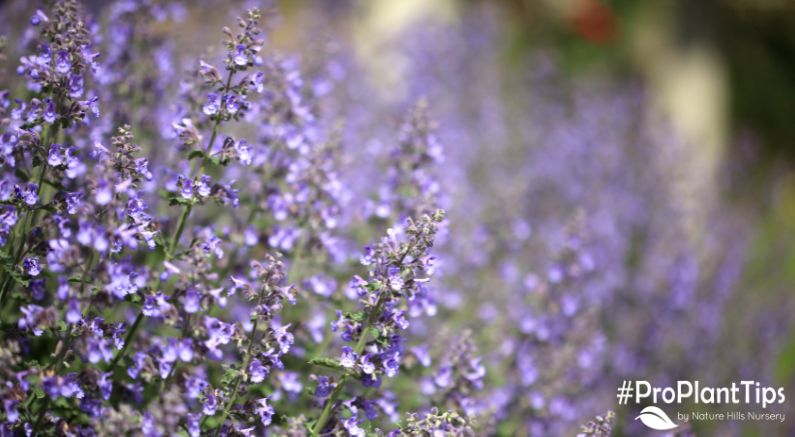
These showy plants send up terminal spires of lavender-blue, white, or pink flowers with two-lipped corollas. The pollinators and beneficial insects will arrive in swarms for these nectar and pollen-rich flower clusters! Even a hummingbird or two will drop by to sip from the tubular florets!

These perennials send up square, erect, and branched stems like the rest of their Mint-family relatives, averaging 1 to 3 feet high. You can pinch back your plants to keep them denser and lower growing.

Flowering throughout the late spring and early summer, with a rebloom that can last until fall, Catnip and Catmint are wonderful scented and aromatic plants from top to bottom!

Calamints

Also in the Mint family, but a different Genus that is closely related to Nepeta is Calamintha, known commonly as Lesser Calamint. A fragrant, low-growing groundcover type plant that has white tubular flowers covering the stems from late spring until frost. Calamint loves those sunny, well-drained soils, easy care, and amazing landscape plants that were the 2021 perennial plant of the year. Check out Lesser Calamints here!

Landscaping & Enjoying Catmint!

Catmint Landscape

Showy mat-forming clumps that can creep and spread when allowed to, or easily kept as tidy mounds, Catmint is a breeze to grow!

These low-water usage plants are great for Rock Gardens, are drought-tolerant plants for Xeric sites, Firewise landscape plans, and equally ideal for pampered Cottage gardens alike!

Use Catmints as spillers and fillers in containers and small gardens as easily as they form mass plantings, filling your landscape or container gardens with their fine-textured, aromatic beauty! Try SylvesterBlue™ Catmint as a bold purple spiller in planters, hanging baskets, and window boxes!

Neptune Catmint will quickly become your favorite bold thriller in mixed planters, or taller Six Hills Giant Catmint as a dramatic back-of-the-border perennial plant or cut flower garden accent!

Walker's Low Catmint shines in the sun with its long spires and tidy clumps that work as focal points in the mixed perennial garden!

The naturalized form of Catnip Plants is a must-have for the pollinator border and creates spreading clumps in your Herb Gardens!

Catmint Landscape

Easy mass plantings that control erosion on hillsides and slopes in the sun, native Catnip can root at each node and spread this way and by way of seeds too! Because of this … you might want to keep an eye on your Catnip plants to prevent them from overstepping.

Use the trimmings to dry for tea in your Tea garden and Victory garden, where the flowers bring in the bees and pollinators that help your veggies and fruiting plants get a pollination boost! You can also dry the leaves and crush them to stuff into your cat toys, as both Catmint and Catnip have a fun effect on your feline friends!

Keeping Catmint Growing Healthy!

Nepeta are wonderfully carefree and easy-to-grow plants, and you will enjoy having them in your garden! Thriving in harsh settings, dry and poor soil locations, are salt-tolerant, and very low maintenance, these plants will shine despite neglect and difficult planting sites!

  1. Catmint and Catnip are full-sun herbaceous perennials and need at least 6 hours of sun each day. You’ll get the best flowering display and the densest growth this way.
  2. Grow Nepeta in very fast-draining soil locations or in a raised bed to provide drainage. Any type of soil from rich pampered garden settings to poor sites along the hell strip of a road or sidewalk works for these plants! They will even tolerate some road salt!
  3. Give these plants a planting hole that is just as deep but a bit wider than their root system, with a 3-4 inch deep layer of mulch over their roots.
  4. Providing regular water for new installations, not allowing them to dry out between waterings, and watering at the roots using the Finger Test helps ensure proper moisture access.
  5. Pinch back plants in the early spring to encourage branching and increased blooms while shoring up their size if desired!
  6. Shearing them after the first round of flowers will keep the overall size in check and quickly push out the next round of long-lasting flowers.
  7. Prune back plants in the late autumn if you had any foliar issues that year, or wait until early spring in a warmer growing zone, as some of these plants can remain semi-evergreen in mild winters.
Catmint

Get Your Catnip and Catmint Growing Now!

The aromatic qualities of the Nepeta family come from nepetalactone, which is similar chemically to feline pheromones, triggering a playful, wild response from cats, but has a calming, nervine effect on people! Help promote sleep and calm with a cup of Catmint tea while also acting as a digestive aid.

So bring in the soft, silvery, and scalloped leaves to perfume your garden and enjoy the soft blue and lavender, white, and pink blossoms accenting your landscape! Fun colors and fragrances, add the calming and serene presence of these hardy perennials in your garden, in your containers, and even vase bouquets indoors!

You will find a wide selection of Catnip and Catmint at NatureHills.com and enjoy all the benefits these easy-going perennials have in store for you!

Happy Planting!

Shop Catmints

Previous Next

Compare Plants

Browse the features and specs side-by-side to find the best fit for your garden.

A table comparing the facets of 1 products
Facet
Lesser Calamint
Lesser Calamint
View details
Rating
Rating
(2)
Type
TypePerennial
By
ByNature Hills Nursery
Flower Color
Flower Color
  • Purple
  • White
Growing Zone Range
Growing Zone Range
5-8
Mature Height
Mature Height
1-2 ft
Width
Width
1-2 ft
Price
Price
Regular price From $1699

Frequently Asked Questions

Does catmint spread?

Yes, catmint does spread, but the growth habit varies significantly by variety. Some catmints form tight, well-behaved mounds while others spread more aggressively through underground rhizomes, stem nodes that root when touching the ground, and self-seeding. Most varieties grow 1 to 3 feet high and wide, spreading at a moderate pace that can be easily controlled. Choose clumping varieties for contained growth, or embrace the naturalizing types for larger areas where you want them to fill in over time.

Can catmint grow in shade?

Catmint performs best in full sun and will struggle in shade, as it's naturally adapted to sunny, well-drained conditions. While it may tolerate light shade, you'll see reduced flowering and a more sprawling, less compact growth habit compared to plants grown in full sun. The aromatic foliage and prolific blooms that attract pollinators depend on adequate sunlight for optimal development. For best results, plant your catmint in a location that receives at least 6 hours of direct sunlight daily.

Can humans take catnip?

While catnip (Nepeta cataria) is safe for human consumption and has been traditionally used as a mild herbal tea with calming properties, it's primarily grown as an ornamental perennial for pollinators and feline enrichment. The plant contains nepetalactone, which creates a euphoric response in cats but acts as a mild sedative for humans when brewed into tea. Always consult with a healthcare provider before using any plant medicinally, and harvest leaves from pesticide-free plants if you choose to make herbal preparations.

Can i eat catnip?

While catnip (Nepeta cataria) is technically edible and has been used historically as an herbal tea, it's primarily grown as an ornamental perennial and cat stimulant rather than a culinary herb. The leaves have a strong, minty flavor that most people find too intense for regular consumption. If you want to try catnip tea, harvest young leaves in late spring before flowering and steep them briefly in hot water. For culinary herbs, consider planting kitchen-friendly mint varieties like spearmint or peppermint instead.

Can you plant?

Yes, catmint is excellent for planting and thrives in USDA zones 3-9 in full sun with well-drained soil. These hardy perennials grow 1-3 feet tall and spread readily through underground rhizomes, making them perfect for borders, herb gardens, or naturalized areas. Plant them in spring after the last frost, spacing 18-24 inches apart to allow for their spreading habit. Choose varieties based on your space needs - from tight clumps to freely naturalizing forms.

When is the best time to plant catmint seeds indoors?

Start catmint seeds indoors 6-8 weeks before your last expected frost date in spring. Seeds germinate best at temperatures between 65-70°F and typically sprout within 7-14 days. In zones 3-9, this usually means starting seeds indoors between late February and early April, depending on your location. Sow seeds 1/4 inch deep in seed starting mix and keep soil consistently moist until germination occurs.

How far apart should catmint plants be spaced?

Space catmint plants 12 to 18 inches apart for most varieties, though larger cultivars like 'Six Hills Giant' need 24 to 30 inches between plants. This spacing allows for proper air circulation and prevents overcrowding as the plants spread to their mature width of 2 to 3 feet. In zones 3-9, catmint will fill in gaps within one growing season when planted in spring after the last frost. Plant at the wider spacing if you want individual specimens, or closer together for a dense groundcover effect.

What soil conditions does catmint need to thrive?

Catmint thrives in well-draining soil with a pH between 6.1 and 7.8, tolerating both sandy and clay soils as long as drainage is adequate. This hardy perennial performs best in zones 3-8 and actually prefers poor to average soil conditions over rich, fertile ground. Avoid heavy, waterlogged soils which can cause root rot and reduce flowering. Plant in spring after the last frost date, ensuring the planting site drains well within 24 hours after heavy rain.

How often should you water catmint plants?

Water newly planted catmint deeply once or twice per week for the first month to establish roots, then reduce frequency as this drought-tolerant perennial matures. Established catmint in zones 3-9 typically needs watering only during extended dry periods of 2-3 weeks without rain, requiring about 1 inch of water per week when actively growing in spring and summer. Check soil moisture by inserting your finger 2-3 inches deep—water only when soil feels dry at this depth to prevent root rot from overwatering.

What type of sun exposure does catmint prefer?

Catmint thrives in full sun exposure, which promotes the most vigorous growth and abundant flowering. These hardy perennials perform best with at least 6-8 hours of direct sunlight daily, though they can tolerate partial shade in hotter climates. Plant your catmint in the sunniest spot available in your garden for maximum flower production and compact, dense growth habit.

Find Your Garden's Growing Zone!

Your Current Growing Zone:

Zone

ZIP Code:

✓ Growing Zone Set Successfully!

Your zone has been saved and will be used throughout the site.

⚠ Unable to locate a growing zone for that ZIP code.

Please check your ZIP code and try again.

Looking up your growing zone...

When ordering a tree or plant, make sure to know your planting zone.

You can determine your garden's USDA hardiness zone by entering your Zip Code below.