
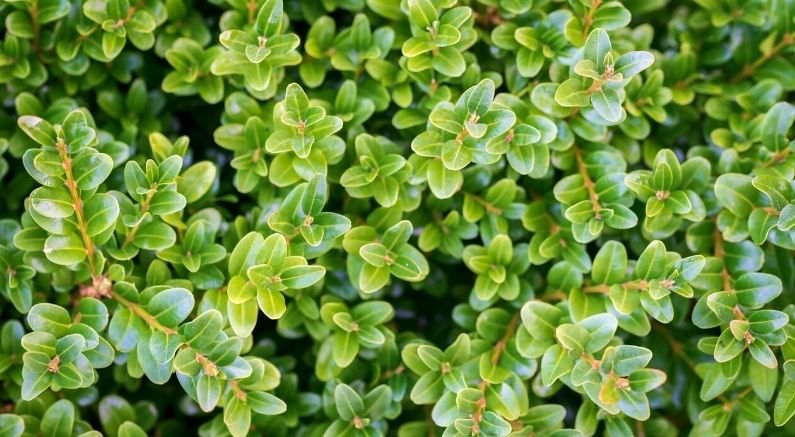

Broadleaf evergreens are a must-have for any landscape, offering lush greenery, structure, and seasonal interest all year long. Unlike deciduous trees that shed their leaves in fall, and coniferous evergreens that have more spiny foliage, these hardy plants have actual leaves yet keep their foliage even through the coldest months, adding depth, texture, and privacy to gardens and outdoor spaces.
From classic Holly and Boxwood to elegant Rhododendrons and Camellias, broadleaf evergreens come in a variety of sizes, shapes, and colors to suit any landscape design. However, while they are incredibly resilient, winter care is essential to keep them healthy and vibrant, preventing common cold-weather issues like winter burn, dehydration, and frost damage.
Read on to learn more about these fascinating evergreen plants!
Why Choose Broadleaf Evergreens For Your Landscape?
- Year-Round Interest – Maintain greenery and texture even in winter.
- Privacy & Screening – Great for natural fencing and windbreaks.
- Low Maintenance – Once established, they require minimal upkeep.
- Drought Tolerance – Many varieties adapt well to dry conditions.
- Wildlife-Friendly – Provide shelter and food for birds and pollinators.
- Versatile Uses – Perfect for hedges, foundation plantings, and specimen trees.
Popular Types of Broadleaf Evergreens
The benefit of having leaves throughout the year gives your landscape amazing possibilities for their use! Plus, many of these have incredible flowers that we know and love!
Boxwood (Buxus spp.)
- A classic landscape favorite with small, glossy green leaves.
- Perfect for formal hedges, borders, and topiary designs.
- Varieties like Wintergreen Boxwood are bred for cold hardiness.
Holly (Ilex spp.)
- Deep green, spiny leaves and bright red berries in winter.
- Excellent as a privacy hedge or ornamental feature.
- Many varieties, including American Holly and Inkberry, thrive in diverse climates.
- Note there are also deciduous Holly and you can learn more about the different Holly in our Garden Blog Here!
Rhododendrons & Azaleas (Rhododendron spp.)
All Azaleas are Rhododendrons, but not all Rhododendrons are Azaleas. Learn more about their differences here!
- Broad, leathery leaves with spectacular spring flowers.
- Great for woodland gardens and shaded areas.
- Some varieties, like PJM Rhododendrons, are extremely cold-hardy.
Camellia (Camellia spp.)
- Elegant, rose-like flowers bloom from late fall through spring.
- Loves mild winters and sheltered planting locations.
- A staple in southern gardens and Asian-inspired landscapes.
- Very easy to grow - Learn how here in our Garden Blog
Laurel (Prunus laurocerasus & Kalmia spp.)
- Glossy green leaves with a fast-growing, dense habit.
- Ideal for hedges, screening, and erosion control.
- Varieties like Mountain Laurel add seasonal blooms.
Mahonia (Mahonia spp.)
- Unique, spiky leaves with winter-blooming yellow flowers.
- Excellent for pollinator gardens and deer-resistant landscapes.
- Thrives in part shade and well-drained soil.
- Check out Nature Hills’ Soft Caress Mahonia
Southern Magnolia (Magnolia grandiflora)
From the native and stately Southern Magnolia, there are also cultivars like the D.D. Blanchard, Bracken's Brown Beauty, and Sweet Bay Magnolia.
- Large, shiny evergreen leaves with velvety bronze undersides.
- Produces fragrant, creamy white flowers in summer.
- Excellent shade and specimen tree, ideal for southern climates.
Japanese Pieris (Pieris japonica)
- Features cascading white or pink flowers in early spring.
- Glossy green leaves transition to bronze or red hues in new growth.
- A perfect choice for foundation plantings and woodland borders.
Oregon Grape (Mahonia aquifolium)
- Deep green, holly-like leaves with clusters of bright yellow flowers.
- Produces blue-purple berries that attract birds.
- Great for naturalized plantings and erosion control.
- Check out the dwarf form Compact Oregon Grape Holly
Southern Live Oak (Quercus virginiana)
- A majestic, long-lived evergreen oak with a wide, spreading canopy.
- Features thick, glossy green leaves that remain year-round.
- Highly resistant to drought, wind, and salt, making it perfect for coastal and southern landscapes.
- Provides excellent shade and shelter for wildlife, attracting birds and pollinators.

Many hot climate and tropical plants like Citrus Trees, Euonymus, Gardenia, and more obviously keep their foliage year-round as there is no winter to contend with!
These broadleaf evergreen trees and shrubs add four-season interest and privacy, structure, and texture to any landscape while providing shade, landscape definition, and support for wildlife. Check out our other picks for some of the more unique Broadleaf Evergreens you can add to your garden!
Caring For Broadleaf Evergreens In Winter
While broadleaf evergreens are built to withstand the elements, harsh winter conditions can take a toll. Cold winds, freezing temperatures, and dry air can cause leaf scorch, dehydration, and even dieback if proper precautions aren’t taken.
How to Prevent Winter Burn on Broadleaf Evergreens
Winter burn occurs when evergreens lose too much moisture through their leaves due to dry winter air and frozen soil preventing water uptake. Symptoms include:
- Brown or scorched leaf edges
- Yellowing or curling leaves
- Leaf drop in extreme cases
How to Prevent Winter Burn on Broadleaf Evergreens
Winter burn occurs when evergreens lose too much moisture through their leaves due to dry winter air and frozen soil preventing water uptake. Symptoms include:
- Brown or scorched leaf edges
- Yellowing or curling leaves
- Leaf drop in extreme cases
1. Use Anti-Desiccant Sprays
Applying an anti-desiccant (anti-transpirant) spray forms a protective coating on the leaves, reducing moisture loss caused by harsh winter winds and dry air.
- Apply in late fall before freezing temperatures arrive.
- Reapply mid-winter if temperatures rise above freezing.
- Ideal for Boxwoods, Hollies, and Rhododendrons.
2. Winter Watering For Broadleaf Evergreens
Even in dormancy, broadleaf evergreens need water to prevent dehydration.
- Water deeply before the ground freezes (late fall).
- On warmer winter days (above 40°F/4°C), give them a slow, deep soak.
- Mulch around the base to retain moisture and regulate soil temperature.
- Read about Winter Watering in our #ProPlantTips Blog
3. Shield From Harsh Winds
Strong winter winds can dry out and damage broadleaf evergreens.
- Plant in a sheltered location when possible.
- Use burlap wind barriers around sensitive plants, especially Boxwood and Holly.
- Avoid planting near heat-reflecting surfaces like concrete driveways or south-facing walls.
4. Mulch For Insulation
A 3-4 inch layer of organic mulch helps retain soil moisture and warmth.
- Apply mulch around the base but avoid piling it against the trunk.
- Use materials like shredded bark, pine needles, or compost.
5. Prune With Caution in Late Winter
Avoid heavy pruning in late fall, as new growth is more vulnerable to frost damage.
- Remove damaged or dead branches in late winter or early spring.
- Shape hedges after the last frost for healthy new growth.
Troubleshooting Winter Damage On Broadleaf Evergreens
If your broadleaf evergreen shows signs of winter stress, don’t panic—many can recover with proper care in spring.
- Brown or scorched leaves? Trim off dead or damaged foliage in early spring.
- Leaf drop? If branches are still alive, new growth should emerge in spring.
- Shriveled or wilted leaves? Increase deep watering in early spring and apply a balanced slow-release fertilizer.
Broadleaf Evergreens: Essential For Four-Season Landscapes

Broadleaf evergreens are powerhouses in the landscape, providing structure, privacy, and color in every season. With the right care—especially proper winter protection—these resilient plants will thrive for years, adding beauty and function to your outdoor space.
Looking to add low-maintenance, year-round greenery to your landscape? Shop top-rated Broadleaf Evergreens now at Nature Hills Nursery! Choose from cold-hardy Boxwoods, vibrant Hollies, shade-loving Rhododendrons, and more—all backed by our Plant Sentry™ protection and product guarantee!
Happy Planting!

