
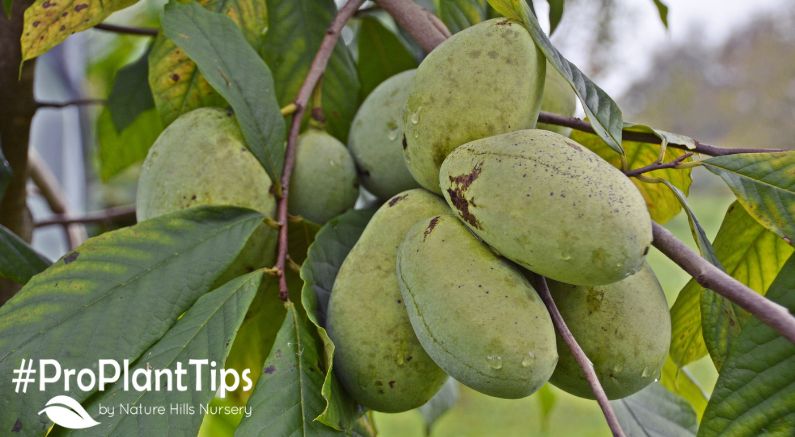
Exotic fruit in your own backyard? Introducing the Pawpaw!
Pawpaw trees are native, tropical-looking fruit trees that many have not heard about just yet! A remarkably cold-hardy and disease-resistant tree that grows large, edible, custardy-textured fruit that is to die for! Their deep root systems mean they are also drought-resistant!
Living to around 40 years of age, The largest North American fruit, the native Asimina are also deer-resistant and pest-free! Pawpaws thrive in moist, fertile, well-drained soils that have a pH of 5.5 to 7.0, making them fantastic worry-free trees for you to include in your orchard!
Creamy Tropical & Healthy Fruit!

Forming large oval fruit with smooth skin, occasionally with a glaucous dusting over the orange, yellow, green, or pink skin, Pawpaw fruit have large brown seeds that are easy to remove, leaving behind the custard-like pulp that is rich and creamy!
Use the flesh for healthy baked goods, churn into ice cream, serve fresh over yogurt and cereal, whiz up into smoothies, and spoon straight out of the rind! With a flavor likened to bananas, mango, and other tropical fruit.
In addition to tasting good, they are full of nutrients and vitamins we need like Vitamin C and B6, magnesium, potassium, iron, and more!
Pawpaw fruit ripens at various times in the fall depending upon the cultivar and the location they are being grown. Generally, you would begin harvesting Pawpaw fruit in midsummer through the first frost. You can tell your fruit are ripe and ready to pick when the skin has achieved maximum coloration and a bit of a blush in some varieties. The fruit should have a slight give when pressed (like an Avocado) and have a slight exotic fragrance. You can also leave the fruit on the tree until it softens for maximum flavor.
Pawpaws produce a gas called ethylene when ripening, similar to Apples, and can make other fruit and vegetables ripen faster as well. In nature, Pawpaw fruits simply fall from the tree when they are ripe, but Pawpaws can also be handpicked from the tree slightly under-ripe and still ripen well! Just like Pears and other fruit that ripen off the tree, you can speed ripening by placing them in a brown paper bag.
Choosing the Pawpaw for Your Landscape

Nature Hills offers filters to make your shopping experience convenient. Use our USDA planting zone filters, choose sun exposure levels, height preferences, and more!
These late-season treats add a tropical flair to northern growers' orchards. Many seed-grown Pawpaw trees can take 5-8 years to bear fruit, while grafted trees require much less. Nature Hills ships plants that are 3-5 years old, so you won’t wait as long before enjoying your first harvest!
Among the many fantastic features of this easy-care native selection, you will also enjoy a touch of bright fall foliage and a long-lasting shade tree!
Pawpaw Pollination
Pawpaw’s unique blooms have 6 reddish brown petals and range from red to purple. These blooms are pollinated by beetles and flies, however, these trees are not the best at pollinating themselves and will need a pollinator partner. But, this prevents your tree from being inundated by the enormous fruits - some of which can range from 7 oz. to as much as 2 lbs, depending on the variety!

Because Pawpaw trees are not considered to be self-pollinating, we suggest planting either two seedlings (native) varieties or two different grafted varieties in close proximity. Many prefer to plant two plants in the same planting hole so they can easily pollinate each other. Pawpaw trees now have many size options available to you and they respond well to pruning so that any sized landscape can accommodate one or multiple trees for increased pollination.
Maroon-centered male flowers are upside down, while female flowers are larger and have green centers. As mentioned earlier, bees are not attracted to the Pawpaw tree's flowers, instead, they attract beetles, flies, and other insects. However, these are not the most efficient at pollination. Many Pawpaw growers prefer to take a small paintbrush and collect pollen from the male flowers and deposit it into a baggie Then transfer that pollen to the female flowers with the brush. You can either transfer pollen from the same tree, or from different varieties of Pawpaw trees.
Pawpaw Tree Care
Pawpaws produce fruit the best in full sun but do tolerate partial shade. These hardy native trees tolerate almost any kind of soil type so long as it is well-drained. Doing best in soil that is moderately moist, once established, Pawpaws are quite drought tolerant.
The soil should be slightly acidic with a pH of 5.5-7 and planted in deep, fertile soil. Pawpaws also appreciate a 3-4 inch thick layer of mulch over the root system.
- Full Sun to Partial Shade
- Rich Well-Drained Soil
- Moderate Fertility
- Appreciates Mulched Sites
- Prune When Dormant
Prune Pawpaw trees when dormant in the late winter or very early spring, Remove crossing branches, open the canopy to air and sun, and maintain size and shape with some annual pruning. Don't be afraid to maintain the plants low-branched to help keep harvesting easier as the plants mature.
Tropical Delights!
You’ll love the tropical look of these eye-catching trees and their tropical fruit! Add a late-season fruit to your orchard today and extend your family’s access to new and unique fruit while enjoying shade, accents and curious blooms for pollinators.
With an easy-going nature that is imparted from their native roots, Pawpaw trees are just the ornamental edible landscaping tree that provides you with fall color that is both drought-tolerant and pest-resistant as well!
Interested in growing your own Pawpaws? Fruit growing in your own backyard is definitely more valuable and tastes great. Nature Hills has you covered with a wide selection of amazing Paw Paw Trees! Amaze your guests with a tropical-looking tree and its unique, flavorful creamy fruit! Order your new double-duty fruit trees today with the help of Nature Hills Nursery!
Happy Planting!
