
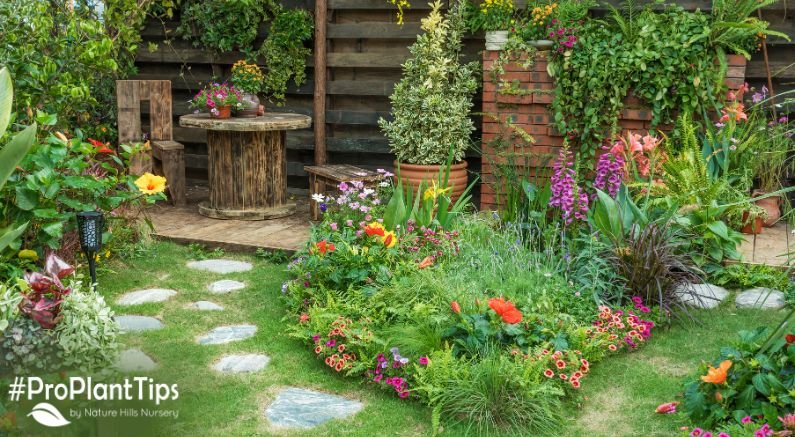
Bring a dash of passion to your garden with the stunning colors of pink and red that Nature Hills Nursery has to offer!
From the world of cosmetics and fashion which has every possible shade of pink to red, to the natural world outside, pink and red tones seem to both straddle every facet of our lives while also binding them together.
Fill your landscape with these colorful accent colors with a duality complex! Sure to fire up the landscape and create bright beacons that show up and show off in both the sun or shade!
- The Science Behind Red and Pink
- Pink and Red Flowering Perennials
- Pink and Red Flowering Shrubs
- Pink and Red Trees
The Science Behind Red and Pink

Embodying a broad range of human emotions, red is the color of both the Cupid and the Devil, of passion and danger, of fire and power, and the color of both love and hate. We can be so mad we ‘see red’, can be flushed from exertion or passion, or become red in the face from embarrassment or shame.
Red means luck in China and is the color of brides and grooms. Red signifies royalty in many parts of the world but is the color of mourning in parts of Africa. Red has been studied at length for its effects on the behavior of our world!
In physics, the color red is the longest light wavelength discernible to our eyes. In nature, red is the warning color, signifying blood and danger, and is often a warning worn by toxic/poisonous animals. Plants and flowers that specialize in attracting birds for pollination, developed red blooms to deter bees, who are unable to see this hue.
On the color wheel opposite of green, it’s no wonder why red flowers seem to stand out so much better than anything else in a world of green leaves!

Then there is pink!
In grade school, we learn to make pink by mixing red with white, while in actuality, the color pink seems to defy the natural order because it doesn’t technically show up on the color spectrum!
Made up of a mixture of red and violet light - which are opposite each other on the color wheel - so according to science, theoretically … pink doesn’t actually exist! Because of this, our eyes play a trick on us by filling in the gap with pink.
Despite this fact, we still have a huge range of luscious pink hues - from baby pinks to bubble gum, cotton candy, ballet pink, piglet pinks and hot pinks, fuchsia, magenta, to blinding neon pink. Pink embodies feelings of innocence and nurturing, playfulness and nostalgia, and takes people back to their childhoods.

But like red, pink has its own duality since it can make us think of both innocence and burning passion. Bright and hot pinks are associated with love, romance, and even lust or give rise to a sense of urgency. It’s only in the last hundred years that pink became associated with femininity and was a boy color for ages! Even painting rooms pink has been known to reduce aggression!
Flamingos have perfected the impossible pink color, while cardinals and many more are visions in red! It’s amazing how many of our favorite candy and fruit embodies these colors - from strawberries, watermelon, cranberries, and fruit punch.
While red can edge into orange and pink can lean towards purple, and both can stick a toe into coral and salmon - there is a shade, tone, or hue of either of these glamorous colors to match your unique garden style!
Why Choose Red or Pink Plants?
- Red is for love, passion, fire, and romance
- Red is often associated with luxury, wealth and good fortune
- Pink symbolizes youth and good health and oozes cheerfulness and affection
- Pink embraces creativity and wonder and playfulness
- Both contrast keenly with blues, yellows and purples, meld with white and each other!

It’s hard to pick the best from a group this gorgeous! Your perfect pink or red ornamental plant is the one that aligns with your chosen location and function. In other words, it comes down to where you’ll be planting it and how it’s being used!
Many plants have red-tinged new leaves, red stems, and of course many with red fall color! Others have gorgeous red berries and luscious pink fruit. Check out some of Nature Hills' favorite examples of these incredibly colored plants -
Pink and Red Flowering Perennials
These two colors are found in every shade possible in the world of Red and Pink Perennials!
- Perennial Peonies
- Astilbe
- Bleeding Hearts
- Coneflowers
- Sedum
- Coreopsis
- Cardinal Flower
- Hardy Hibiscus - both flowers & foliage!
- Coral Bells - both flowers & foliage!
- Dianthus

Don’t stop with just pink flowers! Want pink hues that last longer than some flowers can provide in your landscape? Choose a Fire Alarm Coral Bells with delicate pink flowers but gorgeous mauve-pink leaves, or the succulent pinkish-burgundy leaves of SUNSPARKLER Firecracker Sedum. Likewise, SUNSPARKLER® Dream Dazzler Sedum has gorgeous pink foliage and pink blooms that simply dazzle!
For rich red hues that last beyond the flowers, choose a frilly and ruffled Cherry Cola Coral Bells, or a red-tinged Red Carpet Sedum! Many types of Hardy Hibiscus have deep red foliage with red and/or pink blooms too! Then there’s the new Geum Blazing Sunset to add some fire to your garden!
Include Ferns in shade gardens like Burgundy Lace Lady Fern or Lady in Red, or ornamental grasses like Red Switch Grass in sun, and some of the many red or pink Clematis for height!
Pink and Red Flowering Shrubs
Pink and red are incredibly common in the flowering shrub world too! And don’t forget that many Roses of all kinds come in a dizzying array of pink and red shades! Then toss in a few Red-Twig Dogwood for red color all winter too! Many Holly and other bushes have red berries for birds and winter décor as well! Find Red-flowering shrubs and pink-flowering bushes in our inventory anytime!
- Weigela - Pink or red blooms and some even have pink to red foliage!
- Spirea
- Crape Myrtle
- Lilacs
- Hydrangea - Especially those in alkaline soils
- Butterfly bushes
- Azalea and Rhododendron
- Althea/Rose of Sharon
- Proven Winners® Color Choice® Double Take™ Scarlet Quince
- Deutzia
- Smokebush
- Heavenly Bamboo
- Red Tip Photinia

Pink and Red Trees
Trees with pink and red foliage are always stand out specimens in the landscape! With the iconic Red Maple and Japanese Red Maples that display red foliage year-round! Plus the new Forest Pansy, Firebird™, and Ragin’ Red Dogwoods, and the Flame Thrower® Redbuds (with pink flowers too!) add dramatic pink and red hues.
The Tricolor Beech trees, and both the Whitewater Weeping Redbud and Carolina Sweetheart® Redbud both have pink variegation in the foliage and look incredible in the light!
- Mimosa
- Crabapples - Try Red Baron or Gladiator®
- Redbuds
- Dogwood
- Magnolia
- Flowering Cherry
- Crape Myrtle
- Flowering and Purple Leaf Plums
Many trees have pink new foliage when the leaves first emerge. And don’t forget the many Trees with impressive red Fall Color Shrubs and Fall Color Trees. Plus many more with red berries for winter interest!
Designing a Garden with Pink and Red

From shade gardens to full-sun backyard landscapes, you can utilize red and pink flowering plants in an endless array of layouts! Many red flowers seem to glow in full sun, while pink seems to cool off the landscape, but you will find both sun and shade at Nature Hills.
First, always make sure to read the care instructions found on the Product Pages. This will let you know how much sun, water, and what type of soil a plant needs to thrive. Find your growing zone here to get started!
- Border beds along walkways & paths
- Mixed Perennial gardens
- Brighten the Shade garden
- Container garden - no yard, no problem!
- Cut Flower gardens - bring the passion indoors
- Foundation plantings - bold curb appeal
- Pollinator garden
- Rock garden or Xeric berm or border
- Install a Rain garden for moist soil
Separate reds and pinks with intermittent splashes of yellow, orange, burgundy, and magenta to create a warmer-toned flower bed. Use purple, blue, and silver/gray for a cooler contrast.
Planting red and white flowering perennials together is an elegant combination that elicits thoughts of celebrations of love like weddings or anniversaries, Valentine’s Day, and fancy parties galore! Plant a garden full of these and pick bouquets for your loved ones.
Caring for Pink and Red Plants

As with many plants at Nature Hills, these red and pink selections are so easy to care for! Most of these plants do best in well-drained enriched soils and need regular fertility. You are sure to find something for your sun or shade needs with ease! Water new plants regularly until they are established during their first year. During the hottest months of the year, you’ll want to take extra care to make sure your plants are getting enough water.
One of the best things you can do for your gardens is to add a 3 to 4-inch layer of arborist mulch chips around the plants. This will help conserve water and protect the roots from the heat in the summer and the cold in the winter. Plus, mulch keeps weeds down. This means the plant doesn’t have to fight for nutrients and your garden looks great with less work.
Find information on pruning your perennials, shrubs, and trees in our Garden Blog!
Add The Color Passion to Your Garden!
Nature Hills has a wide variety of pink and red flowering plants for you to choose from! If you see any sporty red and popping pink flowers you just can’t live without, be sure to order them immediately. You can place orders any time of the year, and we’ll ship your plants when the time is right for planting in your area, with shipping you can track right to your doorstep!
We’re sure you’ll have a garden of red or pink that will make the neighbors green with envy!
Happy Planting!

